

Inclusive data

We want to see marginalized groups have more agency in the data value chain, and that governments and organizations ensure no one is left behind.

Filter by:

A collection of insights, lessons, and resources on building inclusive data systems from Colombia, Ghana, and Kenya 

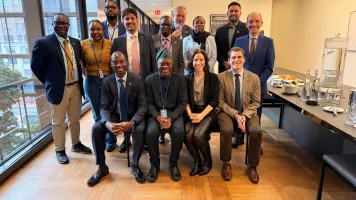
Participants at the first Make Inclusive Data the Norm learning exchange in Nairobi, Kenya, 2024
light

Make Inclusive Data the Norm (MIDN) is a pioneering South-South collaboration between Colombia, Ghana, and Kenya, aimed at advancing inclusive data systems that reflect the lived realities of all people, especially underrepresented communities. 

The initiative is technically led by the Global Partnership, with funding from APC-Colombia, together with the governments of Colombia, Ghana, and Kenya through their National Statistical Offices. 

MIDN aims to enable the three countries to learn from each other's experiences in advancing inclusive data and creating policies that reflect and improve people's lives. This compendium captures the country journeys, challenges, lessons, innovations, and practical tools developed through the MIDN initiative.

Find out more about what makes data inclusive and why this matters in our Inclusive Data Playbook.

This compendium is for
  • Governments interested in collaborating with other countries to exchange knowledge and resources on advancing inclusive data and making underrepresented groups more visible in policymaking.
  • National Statistical Offices (NSOs) seeking to innovate and introduce new data sources, including data collected by citizens, to better reflect people's realities and needs.
  • Civil society organizations (CSOs) looking to work with NSOs, governments, and communities to create better data, including citizen data, to shape better policies and decisions. 

This resource serves as a record of what Colombia, Ghana, and Kenya achieved through MIDN from 2024-2025, and as a practical guide for countries and practitioners seeking to advance inclusive data practices in their own contexts. 

Left position
0
How MIDN works
dark
Menu title
How MIDN works
The power of South-South collaboration

Colombia, Ghana, and Kenya are leaders in data innovation. MIDN enables the countries to leverage their unique strengths, share their insights, and work together to enhance their own inclusive data practices and build the evidence base for what works on creating inclusive data systems. 

Ghana FGM workshop
light
Menu title
The power of South-South collaboration
Sharing expertise, skills, and resources

Between April 2024 and August 2025, each country hosted a learning exchange workshop at key stages in the initiative, where representatives gathered to set out the structure for how they would work together, review progress, and pool their knowledge, expertise, and resources.

Participants at the learning exchange workshop in Nairobi
dark
Menu title
Sharing expertise, skills, and resources
Learning from each other's strengths

The MIDN experience shows that South-South collaboration leads to new ideas and is especially helpful for countries that are dealing with similar challenges with inclusive data use and application. Each country’s innovation in specific areas offers practical examples for the other countries to learn from and apply to their own contexts.

Mr. Godwin Odei-Gyebi, Director and Head of Demographic Statistics at GSS, speaking at the national validation workshop in Ghana in April 2025.
light
Menu title
Learning from each other's strengths
light
Country experiences
dark
Menu title
Country experiences
Colombia: A new Citizen Data Framework

Colombia is focusing on strengthening the use of data collected by citizens to get a clearer picture of people’s lives, particularly underrepresented communities, and inform better policy and practice. This includes the development of a new Citizen Data Framework, and co-creating innovative digital tools for collecting citizen data with communities.

Participants at the national workshop for advancing citizen data, hosted by DANE, Colombia, in June 2025. Part of the MIDN initiative.
light
Menu title
Colombia: A new Citizen Data Framework
Ghana: Better data to tackle FGM

Ghana is focusing on building more timely and inclusive data on female genital mutilation (FGM) in three remote regions of the country, to inform better policies and interventions. This includes the development of a new mobile app for recording data from citizens on FGM safely and securely.

Participants at Ghana's national validation workshop for evaluating the data gaps and advancing inclusive data practices to tackle FGM, in April 2025.
dark
Menu title
Ghana: Better data to tackle FGM
Kenya: Inclusive data at the heart of policy

Kenya is focusing on institutionalizing inclusive data within government and civil society organizations (CSOs), so that it is embedded within data strategy and processes, rather than being an afterthought, including developing a new framework for ensuring citizen data quality and beginning plans to establish a new gender statistics unit in the Ministry of Gender. 

Participants at the three-day inclusive data workshop in Nairobi, Kenya, in May 2025. Part of the MIDN initiative.
light
Menu title
Kenya: Inclusive data at the heart of policy
What we've learned
dark
Menu title
What we've learned
Five key insights from MIDN

Read the biog by Karen Bett on five big lessons from Colombia, Ghana, and Kenya on establishing inclusive data practices through the Make Inclusive Data the Norm initiative.

Group photo at the Make Inclusive Data the Norm learning exchange in Nairobi
light
Menu title
Five key insights from MIDN
Using the Copenhagen Framework

The Copenhagen Framework on Citizen Data sets out principles and practical guidance to help countries and organizations use citizen data more effectively. Find out how each country has applied the framework in practice through MIDN. 

Participants at Ghana's National Validation Workshop on FGM data
dark
Menu title
Using the Copenhagen Framework on Citizen Data
Building trust with communities

Building strong relationships with communities takes time and care, particularly when people will be asked to share sensitive information. Embodying the true principles of co-creation is key, helping create a sense of shared ownership and responsibility while ensuring citizen data quality.

Ghana national validation workshop on FGM data
light
Menu title
Building trust with communities
Four key elements of inclusive data systems

From building political will to continuous capacity development, four cross-country insights have emerged as foundational elements of making inclusive data the norm, outlining how other countries can replicate these achievements.

A peer exchange workshop in Colombia
dark
Menu title
Four key elements of inclusive data systems
light
Looking ahead and country commitments
dark
Menu title
Looking ahead and country commitments
What's next for MIDN

Colombia, Ghana, and Kenya have made clear commitments to continue their pioneering work in building inclusive data systems, including refining, developing, and scaling the innovative new tools and approaches developed through MIDN. 

Participants at the learning exchange workshop in Nairobi
light
Menu title
What's next for MIDN
Recommendations for other countries

Making inclusive data the norm isn't about perfecting separate areas, but developing “reinforcing systems" where each dimension strengthens the others. This creates an inclusive data ecosystem.

Participants at a Make Inclusive Data the Norm workshop
dark
Menu title
Recommendations for other countries
Resources
light
Menu title
Resources
Dark theme
light

Articles and blogs

Stories, insights, and features on the Make Inclusive Data the Norm initiative.


News and press releases 

News stories, media releases, and updates from key moments during MIDN.


Events and workshops

Events and workshops we co-hosted and participated in as part of MIDN.


Training and knowledge materials

Training materials and resources developed as part of the Make Inclusive Data the Norm initiative. 

Menu dark
dark
Countries
Kenya
Program area
Add this content as an Impact story
Off
Date
Resource Type
Colombia Bogota
Dark theme
light

DANE, Colombia's national statistics office, is rethinking who counts as a data producer, partnering with groups like Colombia Diversa, ILEX Acción Jurídica, and traditional midwives in Chocó to capture realities that standard surveys miss. The result is a citizen data framework, built under the Make Inclusive Data the Norm initiative with Ghana and Kenya, that treats community knowledge as a legitimate source of public data.

Rethinking the limits of official statistics

DANE is partnering with civil society, academia, and groups like GPSDD to build a more inclusive statistical system through the Make Inclusive Data the Norm initiative.

 Rethinking the limits of official statistics
light
Menu title
Rethinking the limits of official statistics
light

This framework emphasizes that public-interest information is generated not only by governments but also by communities and organizations that understand their unique data needs. In Colombia, this approach is exemplified by initiatives such as App Diversa, a co-created application with citizens, the Wayuu Multidimensional Registry, and the Partera Vital initiative.

Moreover, various civil society organizations generate data on critical topics such as environmental issues, citizen participation, and human rights, producing evidence that enhances official data sources and deepens the analysis of inequality.

What citizen data means in practice

Building on the Copenhagen Framework, citizen data involves participatory initiatives that engage individuals across the data value chain, anchored in principles of inclusion, responsibility, professionalism, and ethics. Colombia’s Citizen Data Framework, influenced by both the Copenhagen Framework and Colombia's legal standards concerning transparency, access to information, and personal data protection, integrates ethical principles, quality attributes, and intersectionality.

Left position
1
Making the invisible visible with community

App Diversa and Partera Vital show how working with communities surfaces data that official statistics miss.

woman in colombia
light
The road to a citizen data framework

DANE built its framework by learning from communities in places like Tumaco and Chocó, then changing its own protocols to reflect what it learned.

Tumaco, Colombia
light
Menu title
The road to a citizen data framework
light

As María Jimena Vargas Mayo, GIT Coordinator for Territorial Statistical Strengthening at DANE, puts it: "A single quality standard functions as a binary pass/fail gate, which inevitably favors large, well-funded organizations. We would have lost the most critical voices simply because they don't fit a traditional definition of statistical rigor."

"In many of the projects we carried out in rural areas, when we did social cartography and identified the midwife's location, the conditions of social control were different from other areas. They exercise a quite interesting authority because the young people grow up  - and who do they listen to? The midwife. You had to talk to the midwife to carry out any activity with young people, because they don't just know them  - the young people actually listen to her."

Martha Luz Chaverra Ríos - Consultant, Global Partnership for Sustainable Development Data

The Colombia Maturity Model

Colombia’s citizen data framework incorporates a Maturity Model consisting of four progressive levels and dimensions: planning, governance and participation, methodology, and use and impact. This model helps grassroots organizations and citizen groups assess their practices and create practical improvement strategies. DANE adopted this approach due to the asymmetrical nature of the citizen data ecosystem, where a binary quality standard tends to favor larger, resource-rich institutions.

The Maturity Model offers a nuanced view of data quality as a trajectory rather than a fixed point, supporting recognition of both nascent and robust data. The model emphasizes process over product, ensuring that the voices of marginalized communities are included in data assessments. This approach allows organizations to identify their specific situational contexts and promotes a participatory methodology.

Left position
1
Looking forward: From experiment to norm

Colombia is anchoring citizen data in law through Law 2335 of 2023 and the National Statistical Plan's Goal 35, while planning community-led workshops and an advanced course.

Colombian community
dark
Menu title
Looking forward: from Experiment to Norm
Dark theme
light

Authors and contributors

  • María Jimena Vargas Mayo, DANE
  • Mauricio Giovanni Valencia Amaya, DANE
  • Martha Luz Chaverra Ríos, Global Partnership
  • María Alejandra Naranjo Arcila, DANE
  • Abraham Caraballo, ILEX Acción Jurídica
  • María Clara Zea Gallego, Colombia Diversa
  • Eliana Robles-Pallares, ILEX Acción Jurídica
  • Ledy Manuela Mosquera, Association of the Interethnic Midwifery Network of Chocó
  • APC-Colombia
     
Authors and contributors
Download report
Menu dark
dark
Countries
Colombia
Program area
Add this content as an Impact story
On
Resource Type