Open Data Watch (ODW) is an international nonprofit working to build open, inclusive, and sustainable data systems that improve policies and people’s lives. We partner with national statistical offices, governments, civil society, and development organizations to strengthen how development data are produced, financed, made accessible, and used, with a particular focus on ensuring that data systems reflect and serve everyone.
In 2026, Data2X joined Open Data Watch, combining ODW’s expertise in open data, official statistics, and national data systems with Data2X’s global leadership in gender data. Building on a longstanding partnership, the integration strengthens our ability to put gender and inclusion at the heart of stronger national data systems.
Our work is organized around three pillars: research and monitoring, data support, and policy advice. We develop tools and evidence to identify gaps and track progress; support countries in strengthening the enabling environment for data; and bring together networks and partnerships that promote learning, collaboration, and country-led solutions. Across all three, we focus on increasing the value and impact of data throughout the data value chain—from production and publication to uptake and use in policy and decision-making.
Our flagship initiatives include the Open Data Inventory (ODIN), which independently assesses the coverage and openness of official statistics worldwide, and the Gender Data Network (GDN), which supports peer learning and collaboration among gender data experts in national statistical offices in partnership with PARIS21, UNECA, and UN ESCAP. Our broader work encompasses intersectional data, citizen data, gender data financing and use, time-use data, and efforts to strengthen inclusive data systems.
Together, this work helps countries understand where their data systems fall short, what can be done to improve them, and how better data can lead to better decisions for everyone.
Priorities as an Inclusive Data Champion
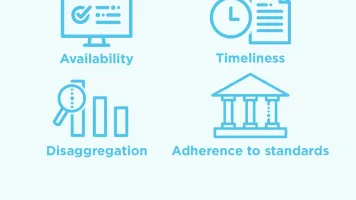
ODW-Data2X is pleased to be a signatory to the Inclusive Data Charter to underscore the importance both of inclusive data and data disaggregation, but also to emphasize the importance of multi-stakeholder engagement on this topic. Gender data progress – and all inclusive data efforts – requires collaboration, particularly in the ‘leave no one behind’ agenda – where excluded groups often face multiple disadvantages. In those cases, having intersectional data that allows examination of gender, age, income level, disability and other disaggregations– is critical to inform sound decision making. ODW-Data2X is excited by the opportunity that the Charter presents to work more closely with other champions to overcome methodological barriers, mobilize support, and boost production and use of the type of nuanced data the Sustainable Development Goals require.
Priorities as a partner of the Global Partnership for Sustainable Development Data
As ODW-Data2X, we will champion open, inclusive, and gender-responsive national data systems. Drawing on our combined expertise, tools, networks, and partnerships, we will help countries identify and address data gaps; strengthen the availability, accessibility, financing, and use of data; and create the conditions for data to inform policy and action.
We will place particular emphasis on embedding gender and inclusion within broader efforts to strengthen national data systems, while continuing to advance open data as a public good. Through research, monitoring, country support, collaboratives, and networks, we will promote country-led solutions, peer learning, and stronger coordination across the data ecosystem.
We will continue to develop and apply tools such as ODIN to assess the coverage and openness of official statistics, while expanding approaches that examine whether data systems are inclusive, responsive to users, and able to turn data into meaningful impact.
As co-lead of the Collaborative on Citizen Data with UNSD, with GPSDD serving on its Steering Committee, we will also advance multi-stakeholder action to strengthen the production and use of citizen data and promote more participatory, accountable, and inclusive data systems.