
It was really encouraging to know that we are not alone. These conversations are happening all around the world; in this global community, we are facing the same challenges. It’s important to share good practices, but it was also interesting to hear honestly from others about what didn’t work.
- Soraya Husain, Fundación WWB Colombia
Working as the Inclusive Data Charter (IDC) Program Manager since 2019, I have seen some incredible achievements and progress in inclusive data. But momentum can be hard to maintain; political will is critical, and in a geopolitically turbulent, resource-constrained time, it can be easy for inclusive data to slide down the priority list.
Moments like the Global Data Festival help counter that. They give IDC Champions space to connect, trade ideas, and learn from what has and hasn't worked elsewhere, and that energy tends to outlast the event itself, feeding new case studies, partnerships, and political engagement long after the closing session.
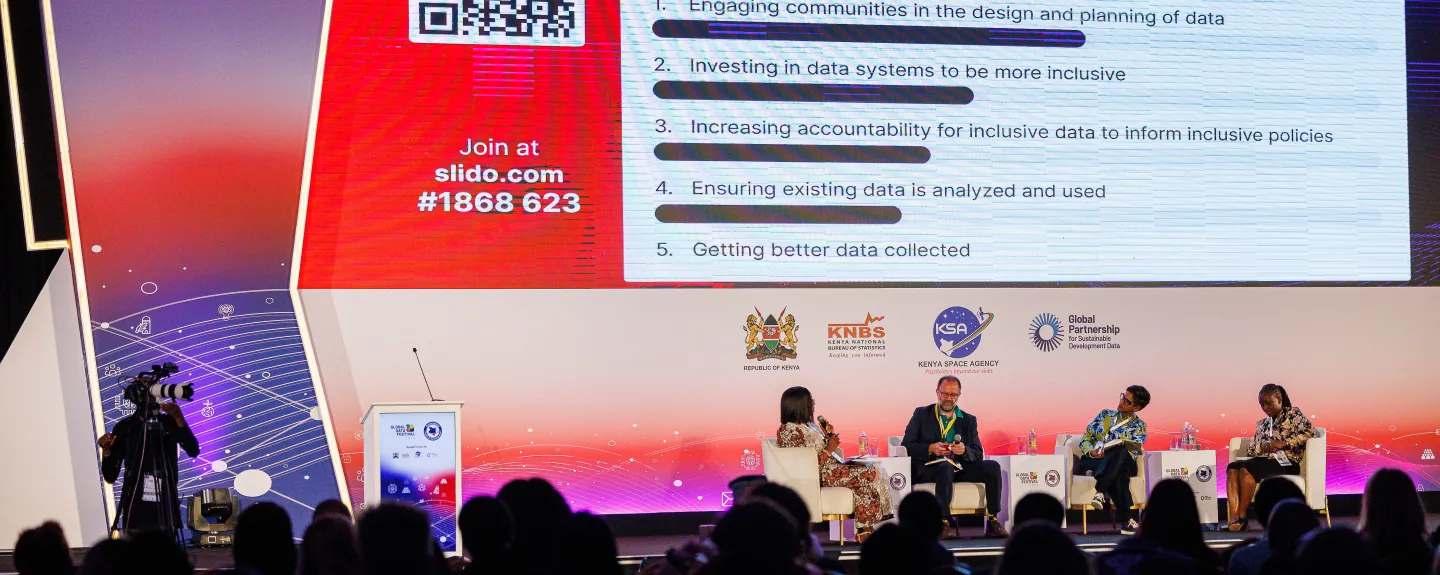
The 2026 event in Nairobi was a rare opportunity for many of the Champions to meet in person, and it was particularly special to have them gathered at an event where inclusion and inclusive data were much more than a discussion topic. Throughout the four days, one thing that stayed with me was the maturity of the conversations around inclusion in data, taking its place as an integral part of the discussion in many sessions.
Below, a selection of IDC Champions who joined us in Nairobi share their highlights.
Paula McLeod, Foreign, Commonwealth and Development Office (FCDO)
The energy and the level of discussion across the data festival in itself was really impressive. It was inspiring. I'm still trying to absorb that energy.
One of the really interesting things I took with me was a line used in the inclusion plenary, which is about what changes if people aren't in the conversation? So moving beyond a perfunctory effort at representation to actual meaningful participation, creating that space at the table, and actually looking at what changed as a result of having people in the conversation or in the data? And I think that's something that I'm reflecting on in terms of the whole inclusion agenda around exactly what's needed, where it's needed, how it's being used, and that next step of really getting the policy impact."
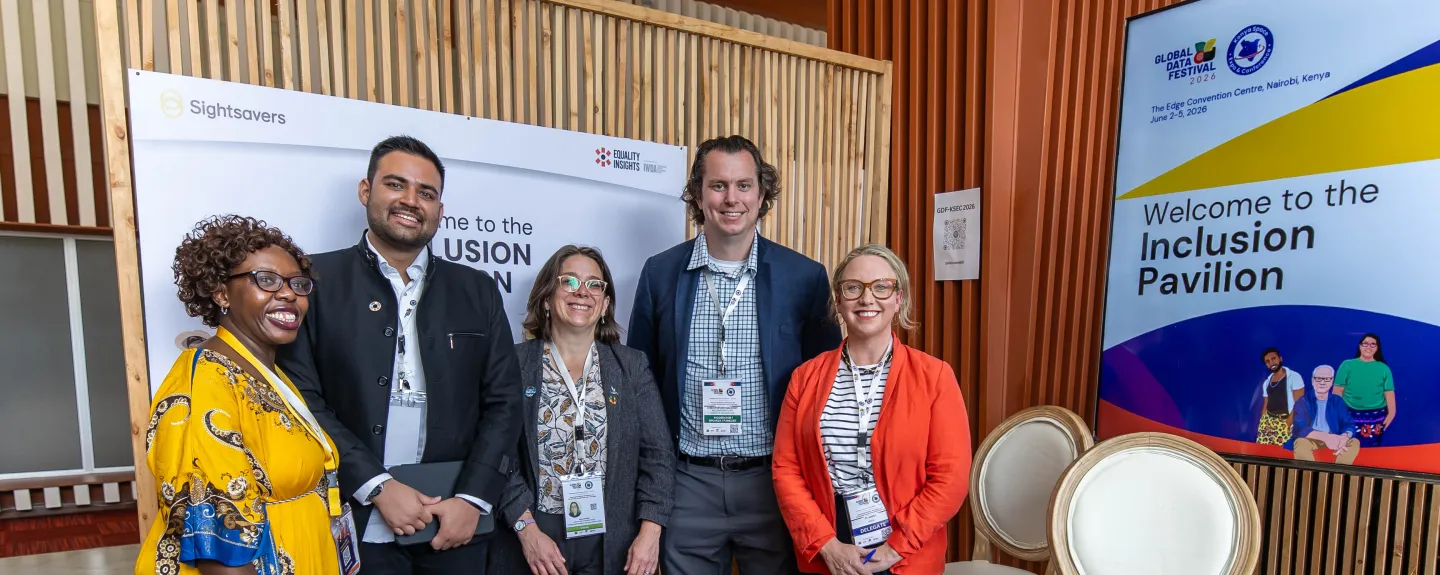
Soraya Husain, Fundación WWB Colombia
For us, our experience was really enlightening. Discussions on bringing citizen-generated data into the heart of national statistics, which is a big topic in Colombia, and seeing how it could work was really inspiring for us. There are, of course, many challenges, but it showed it is possible.
And another highlight was seeing that South-South collaboration actually works. It's a reminder that when the Global South talks to itself, we can move faster, we can move further, and we can develop our own strategies. It's not just about the data systems, but what's behind them. Data is never neutral. It was a good reminder that disaggregated data isn't a luxury; it’s critical to make data systems inclusive."
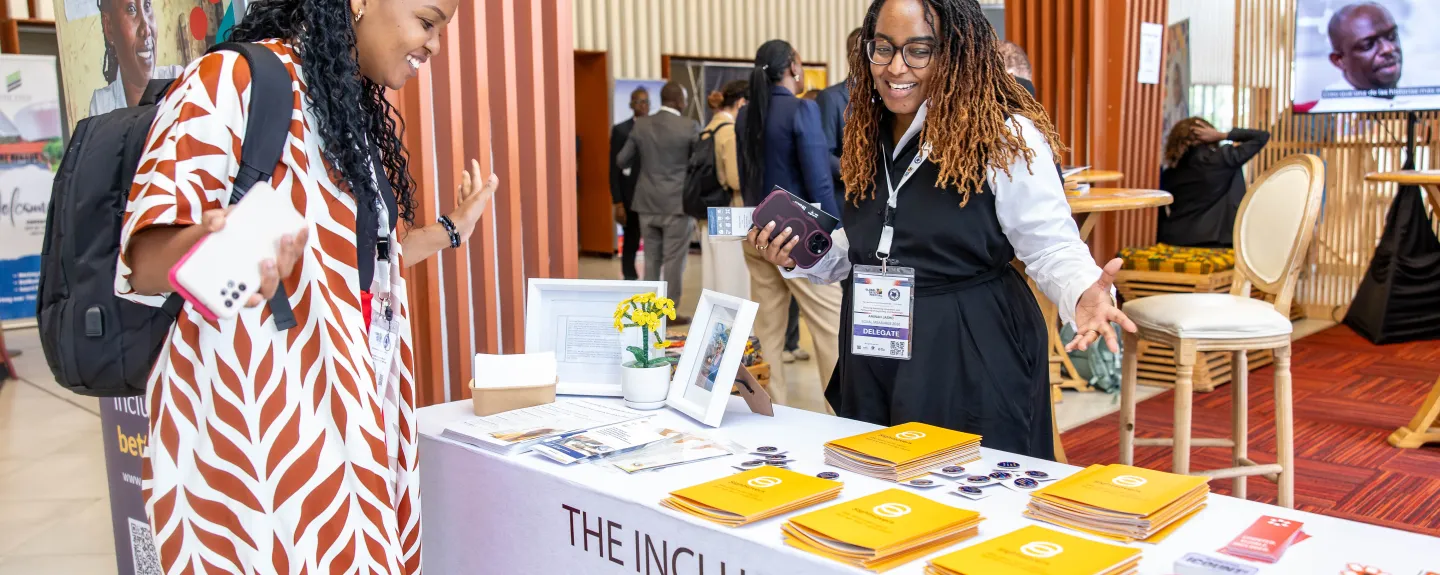
Ernest Nyarku, Ghana Statistical Service
The Festival was an opportunity to develop practical solutions and build momentum across the diverse data communities, which includes practitioners, researchers and also funders.
For Ghana, we tried to bring some examples from our own efforts. Like our SDG reporting: we were able to report on 127 indicators in 2024 (up from 60 in 2018). We also showcased how we have integrated mobile data into official statistics, and how we use Big Data for vessel tracking to measure maritime carbon dioxide emissions.
We also left with many useful lessons. We learned that all governance must come before the AI tools. AI adoption, tools, and data integration partnerships all fail without governance. We gained insights where we can expand our mobile phone data efforts and get big data that can do a lot of social statistics. We also learned a lot about how we can prepare towards the 2030 population housing census, how to include more of the satellites, GIS, and other new technologies for better data to make sure that the numbers actually help to better the lives of our people."
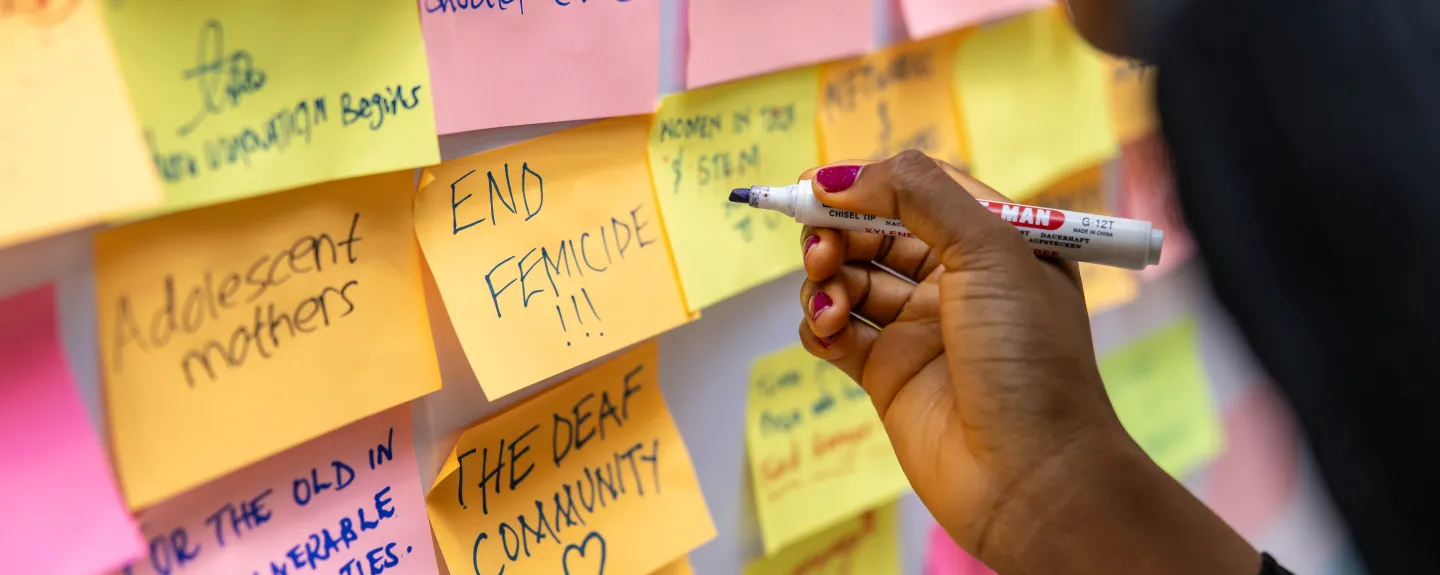
Dalitso Chabwera, Malawi National Statistical Office
One of my key highlights from the festival was the diversity of participants and perspectives represented. It was encouraging to see governments, national statistical offices, civil society organizations, academia, development partners, and the private sector engaging in open discussions on the future of data. The festival demonstrated the value of collaboration in addressing complex data challenges and advancing evidence-informed policymaking.
My key takeaways was that inclusion must be embedded throughout the entire data value chain—from data collection and production to analysis, dissemination, and use. And I was reminded that achieving inclusive data requires strong partnerships. National statistical offices cannot do this alone. Collaboration is essential to improve data quality, interoperability, accessibility, and public trust.
I left the festival inspired by the collective commitment to building stronger, more inclusive data systems that support better decision-making and ensure that everyone is counted and represented in development."
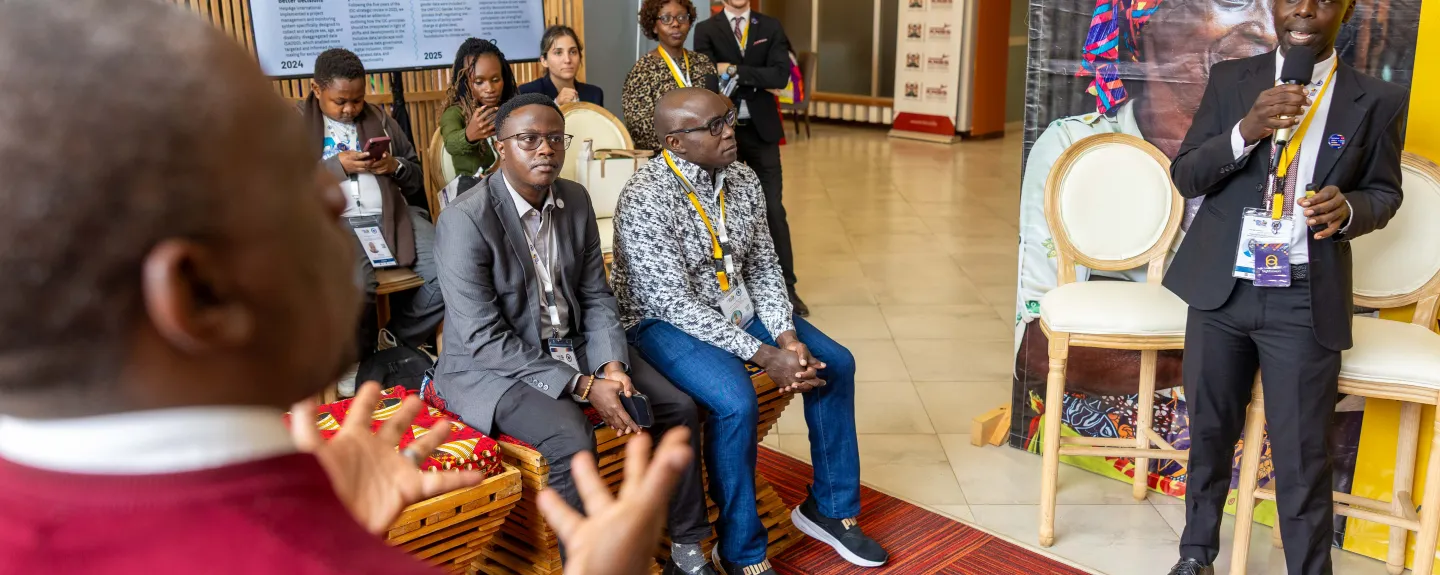
Angélica Raggini – INE Paraguay
Translated with DeepL
At the Global Data Festival the conversation about data went far beyond producing data and statistics, to building comprehensive data ecosystems with emphasis on breaking down institutional silos, linking administrative records, and building systems capable of securely sharing information to improve decision-making.
The discussions on AI reinforced this focus on building good data foundations. The message was very clear: AI will only be useful if it is backed by high-quality, inclusive data and robust governance frameworks.
As a representative of Paraguay’s National Institute of Statistics (INE) and an IDC Champion, the festival confirmed to me that we are on the right track with initiatives such as the harmonization of disability variables and the work we are doing with inclusive data. At the same time, it showed me that we still have a great opportunity to continue strengthening interoperability, data governance, and partnerships with other institutions and civil society.
I’m taking away many ideas, new connections, and the conviction that the IDC community is a very valuable space for continued learning and collaboration among countries."
What comes next
I was inspired and encouraged by the conversations about inclusion at the festival and by seeing so many people championing it. I am looking forward to seeing how the ideas sparked in Nairobi will live on and grow. I hope the discussions about the importance of inclusion for strong data systems and benefiting from new technologies turn into action. For IDC Champions, the work continues. We will be sharing the IDC’s progress on our Commit2Data commitments ahead of the World Data Forum later this year. Beyond that, we’ll continue with advocacy, collaboration and learning to ensure that inclusive data remains integral to conversations on how we drive equity — now and into the future.
Become an IDC Champion!
If you represent a National Statistics Office, Ministry, civil society, international organization, academia, or other sector looking to join the Inclusive Data Charter contact Tichafara Chisaka, IDC Program Manager, [email protected].

