Kenya has been a committed Inclusive Data Charter Champion since 2018, when the government signed the charter at the Global Disability Summit, pledging to ensure that the most marginalized people would not be invisible in national data systems. That commitment took concrete form in the IDC Action Plan 2021–2025, co-signed by the Ministry of Labour and Social Protection's Directorate of Social Development and the Kenya National Bureau of Statistics (KNBS), to strengthen the collection, analysis, and use of disability-disaggregated data across government.
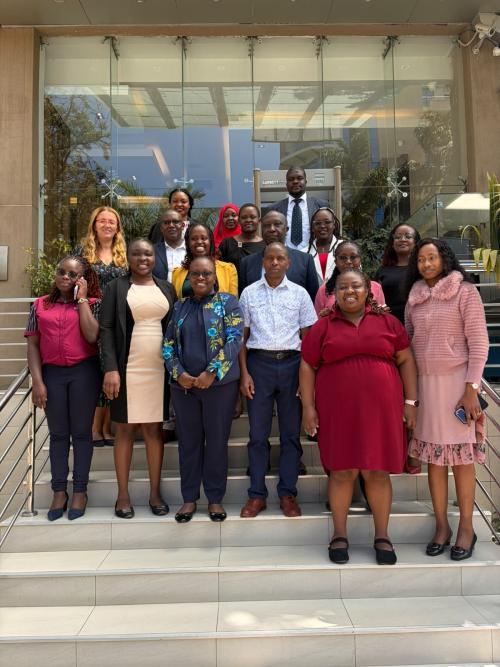
With that first Action Plan now concluded, Kenya has been working to develop second phase plan, with an expanded scope and new targets for inclusive data. This work started with a two-day multi-stakeholder workshop held in March, bringing together participants from government ministries and departments, civil society, organizations of persons with disabilities, KNBS, the National Council for Persons with Disabilities, the Global Partnership for Sustainable Development Data, and the UK Office for National Statistics to take stock of what the first action plan achieved, and to shape a more ambitious second phase for 2026–2030. A followup workshop, held from October 5-7, focused on consolidating the inputs and ideas and drafting the IDC Action Plan 2026-2030.
Five years of progress
Kenya has meaningfully advanced inclusivity in data systems since 2021. Efforts to improve the collection of disability-disaggregated data across government institutions have taken root, and the coordination mechanisms established under the Inter-Agency Coordination and Advisory Committee (IACAC) have created a functioning platform for dialogue between state and non-state actors. At the same time, participants were candid about the gaps that remain—particularly in human capacity, the harmonization of data collection tools across ministries, and the availability of sustained financing for inclusive data activities.
Expanding the scope to gender, children, and older persons
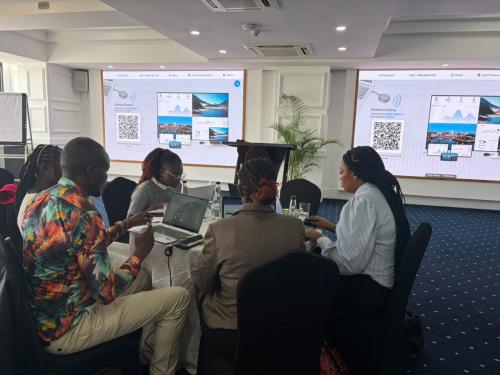
Perhaps the most significant outcome of the workshop was the formal decision to broaden the scope of the IDC Action Plan. While disability has been the main focus of Kenya's inclusive data work to date, Kenya's IDC Action Plan for 2026–2030 will include targets for more inclusive data on gender, children, and older persons, groups whose data needs have not always been systematically met into the charter's framework.
The Ministry of Labour and Social Protection's mandate already encompasses gender, senior citizens, and social protection more broadly. Aligning the IDC Action Plan with that mandate, and working closely with other ministries, such as the Ministry of Gender, means the charter can draw on wider institutional energy and resources, and that the data priorities it sets will be more deeply embedded in government planning cycles. It also reflects the spirit of Leave No One Behind: truly inclusive data systems cannot focus on one marginalized group in isolation.
In drafting the IDC Action Plan 2026-2030, participants in the workshop agreed on a set of specific indicators and activities related to gender and ageing to anchor the 2026–2030 plan, ensuring that the expansion of scope is matched by concrete, measurable commitments.
A movement with momentum
Kenya's renewed and expanding commitment to inclusive data sets an example for how the Inclusive Data Charter becomes part of a countries data journey. Joining the IDC is a commitment that can and should grow with a country's ambitions, its institutions, and its understanding of who is being left behind. By evaluating the first five years honestly and expanding the next action plan's reach, Kenya is demonstrating that inclusive data is an ongoing national project, one that becomes more valuable the more comprehensively it is pursued.
The draft 2026–2030 Action Plan, incorporating disability, gender, children, and ageing priorities alongside a resource mobilization strategy, will now move through a finalization process involving the full range of stakeholders represented at the workshop before publication.
The workshop was organized by the Ministry of Labour and Social Protection, Directorate of Social Development, and supported by the IDC Secretariat, Sightsavers, the Global Partnership for Sustainable Development Data, and the UK Office for National Statistics.