On May 12, 2026, Nigeria's National Bureau of Statistics (NBS) hosted the country's inaugural stakeholders' meeting for the Make Inclusive Data the Norm (MIDN) initiative at its headquarters in Abuja, marking Nigeria's entry into a growing group of countries working to close data gaps for underrepresented populations.
The meeting, themed "Assessing unpaid care and domestic work: women's perspectives in Nigeria," brought together government agencies, civil society organizations, development partners, academic institutions, and women's community groups to build shared understanding of MIDN's goals and agree on next steps for the country.
MIDN is a joint effort between APC-Colombia and the Global Partnership for Sustainable Development Data that helps countries produce and use data reflecting the realities of marginalized and underrepresented groups, including women and persons with disabilities. The initiative began in 2020 and was piloted in Colombia, Ghana, and Kenya, whose early lessons on building trust, community engagement, and data quality are gathered in the MIDN Compendium before expanding into a second phase covering Nigeria and Senegal.
For Nigeria, the focus is squarely on unpaid care work. The meeting was anchored in findings from the country's Time Use Survey, conducted across four states, Kaduna, Lagos, Cross River, and Borno, which found that women carry a disproportionate share of unpaid domestic and care responsibilities. That finding speaks directly to SDG indicator 5.4.1, which tracks how much time people spend on unpaid domestic and care work by sex, age, and location.
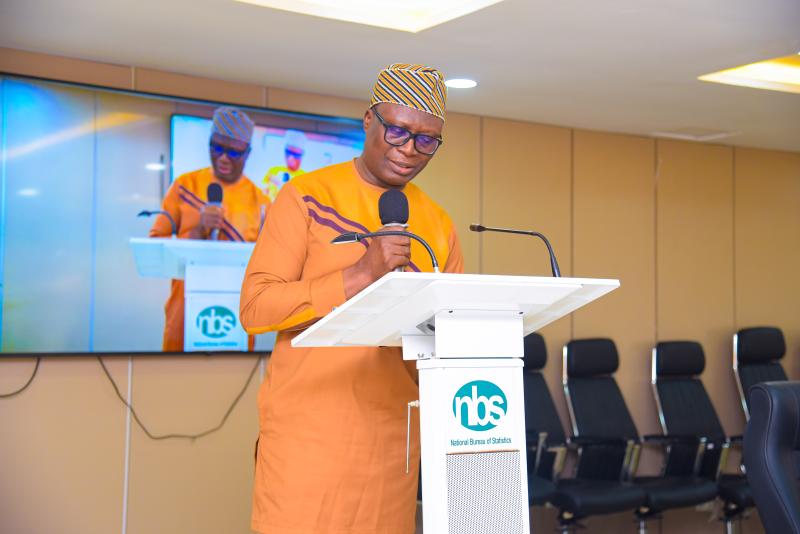
Delivering welcome remarks on behalf of the Statistician General of the Federation, Mr. A. D. Mustapha, Chief Executive Officer of NBS, described inclusive data as a matter of equity rather than a purely technical exercise, and pointed to persistent gaps in data on women's lived experiences that continue to shape policy. Goodwill messages followed from the Federal Ministry of Women Affairs, the National Council for Women Societies, and the Global Partnership, each affirming the importance of making women's contributions visible in national statistics.
Three presentations anchored the day. Victor Ohuruogu of the Global Partnership introduced MIDN's global framework, including the five-pillar structure guiding the initiative and the six-step use case approach countries follow, from identifying a priority problem through to monitoring impact. Ms. Christy Umunna, Head of NBS's Gender and Social Inclusion Statistics Division, walked participants through SDG 5.4.1 and Nigeria's Time Use Survey data, tracing the country's inclusive data journey from a 2016 baseline report through 2023 stakeholder consultations and 2024 pilot implementation to this year's national kick-off. Mr. Esiri Ojo, Technical Assistant to the Statistician General on Special Projects, then set out Nigeria's proposed roadmap, from co-designing data collection instruments with stakeholders to piloting them in selected communities and using the results to inform government decisions.
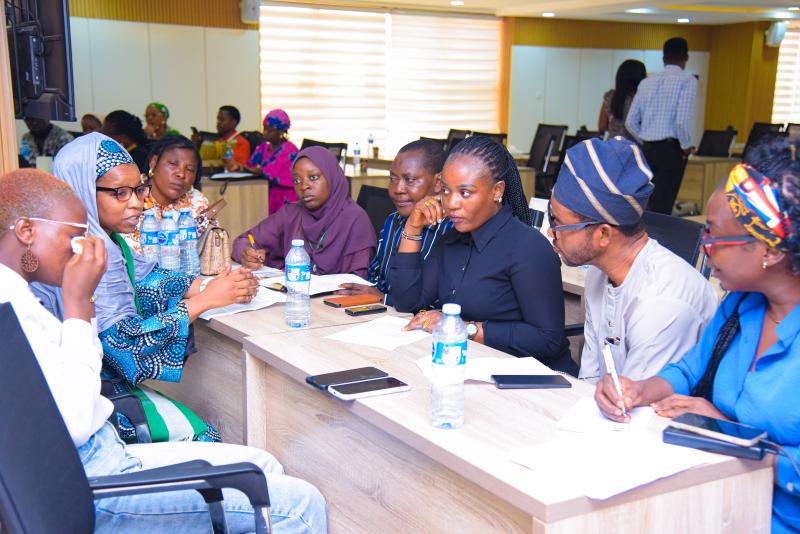
The afternoon moved into breakout discussions, where four groups worked through what unpaid care looks like in Nigeria and what it will take to measure it well. Participants pointed to childcare, much of it carried by older women raising grandchildren, and care for people with disabilities as among the most invisible forms of unpaid work. They called for standardized assessment tools developed with subnational authorities and women's groups, dedicated budget allocations for domestic labour, and legislation to back social protection for women. Other groups mapped out which institutions, from the Ministry of Women Affairs to ActionAid Nigeria to the University of Ibadan's Centre for Gender Studies, need to work together, and what better data could unlock, from community childcare centres to rural water and healthcare infrastructure and universal health insurance for women in care work.
A few themes ran through every discussion. Participants stressed the need to reach women routinely left out of data collection, including those in purdah, rural areas, and living with disabilities; the importance of also capturing men's role in care work to see the full picture; and the recognition that data alone will not shift policy without sustained advocacy and legislative follow-through.
Participants left with a clear set of next steps. NBS will expand outreach to stakeholders who could not attend the kick-off, including disability organizations, religious bodies, and subnational governments, ahead of a larger follow-up meeting. Working committees will form to take on instrument design, stakeholder engagement, data collection oversight, and dissemination.
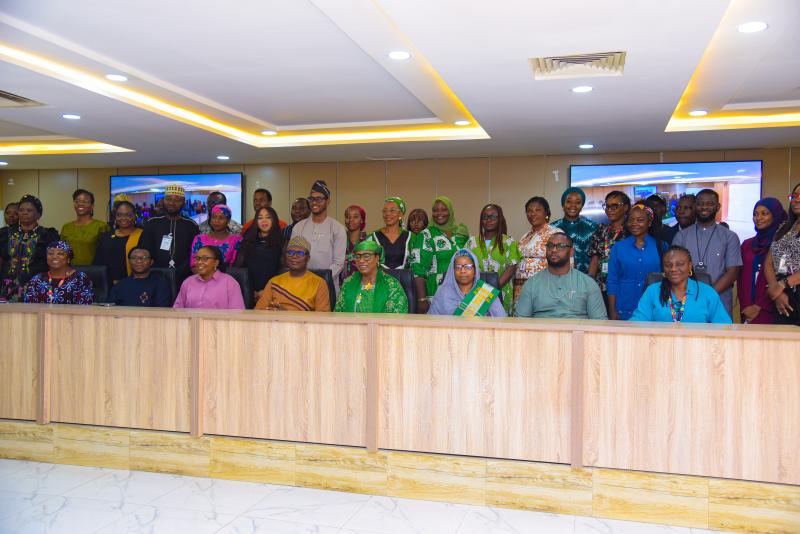
Nigeria's kick-off is the first of MIDN's two Phase 2 countries to formally launch, with Senegal's official kick-off set for later in July. It follows the initiative's momentum through the 57th UN Statistical Commission and the Global Data Festival earlier this year.