
From 2–6 March 2026, the Global Partnership engaged across a series of strategic events at the 57th session of the United Nations Statistical Commission in New York.
Across the week, the Global Partnership spotlighted digital transformation, inclusive data systems, citizen data, administrative data, and sustainable partnership models that strengthen national statistical ecosystems.
Integrating citizen data into official statistics
On 2 March, the Collaborative on Citizen Data convened an evening event on the margins of UNSC on integrating citizen-generated data into official statistics. The session centred on the Copenhagen Framework for Citizen-Generated Data, approved in 2025, and what its arrival means for moving from principles to practice.
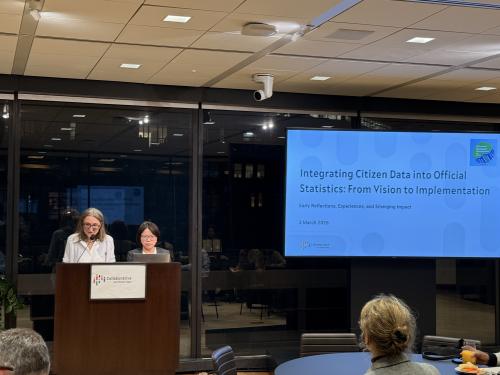
A presentation on the Copenhagen Framework outlined its four core functions: defining citizen data clearly; clarifying stewardship; establishing standards and coherence across data sets; and assessing whether data is suitable for integration with official statistics or should stand alone. The framing emphasised moving away from fragmented, reactive responses toward institutional decision-making, and noted that following a diagnostic process involving over 100 actors, key constraints in capacity and legal clarity are now shaping practical guidance and support.
A panel of country practitioners shared where citizen data has already been embedded in national statistics. Kenya reported significant progress, including the creation of a standalone sampling frame for asylum seekers — a population previously left out of official surveys — now in its eighth month as part of an integrated household survey. Kenya also highlighted ongoing work to strengthen the legal instruments underpinning citizen-generated data. Participants drew on examples from Ghana and Malawi, and discussion surfaced the potential for peer-to-peer work to extend to small island states, which have largely not yet stepped into this space.
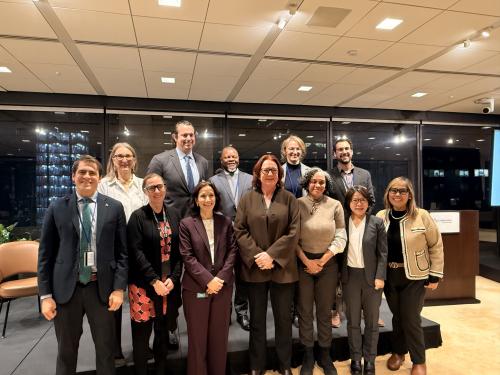
A live poll during the session found that data quality remains the biggest perceived barrier to integrating citizen data into official statistics, and that practical implementation toolkits would do most to increase the Copenhagen Framework’s impact at country level.
In closing remarks, Jenna Slotin, interim CEO of the Global Partnership, reflected on how much the field has matured over ten years of the Collaborative’s work — from early skepticism about whether citizen data from civil society could be credible, to a moment where quality assurance is well-established and measurement is defensible. She noted that citizen data has proven to be as much about engagement as about the data itself, with the Copenhagen Framework opening new channels for NSOs and governments to work with civil society in ways not previously possible. She pointed to the Global Data Festival in Kenya in June as the key next moment for the field to workshop ideas, build new collaborations, and showcase experience.
From principle to practice: Ensuring independence in official statistics
In late 2025, a small group of senior statistical leaders engaged in an informal dialogue on the institutional, political, and power dynamics that shape how official statistics are produced, governed, protected, and used. Building on those earlier exchanges, a closed-door roundtable on 2 March brought senior statistical leaders together for candid reflection on the realities of maintaining independence in official statistics amid growing political and technological pressures.
Facilitated by the Global Partnership and held under the Chatham House rule, the session convened chief statisticians and senior officials from across Africa, Latin America, and Europe, as well as representatives from international organisations including the International Labour Organization and the Economic Commission for Latin America and the Caribbean. Participants reflected candidly on the pressures they face, identifying political interference, budgetary fragility, disinformation and social media, and technological disruption as four compounding and interconnected threats to statistical independence.
The discussion explored both the moments at which independence breaks down — from appointment processes through to publication calendars and methodology decisions — and what practical safeguards hold firm. Participants pointed to the value of strong technical teams, internationally agreed standards, fixed-term leadership mandates, and peer support as meaningful shields against interference. The session also surfaced the need to engage political leaders directly, rather than speaking primarily within the statistics community.
The Global Partnership will share a summary of the discussion and continue the series, including a dedicated session at the Global Data Festival in Nairobi in June 2026.
Make Inclusive Data the Norm: South–South learning in action
Heads of National Statistical Offices from Colombia, Ghana, Kenya, Nigeria, and Senegal convened during the UNSC to launch Phase 2 of the Make Inclusive Data the Norm (MIDN) initiative, supported by APC Colombia. The meeting, held on 4 March, brought together the five NSO heads in person and online to reflect on the achievements of Phase 1 and set priorities for the year ahead.
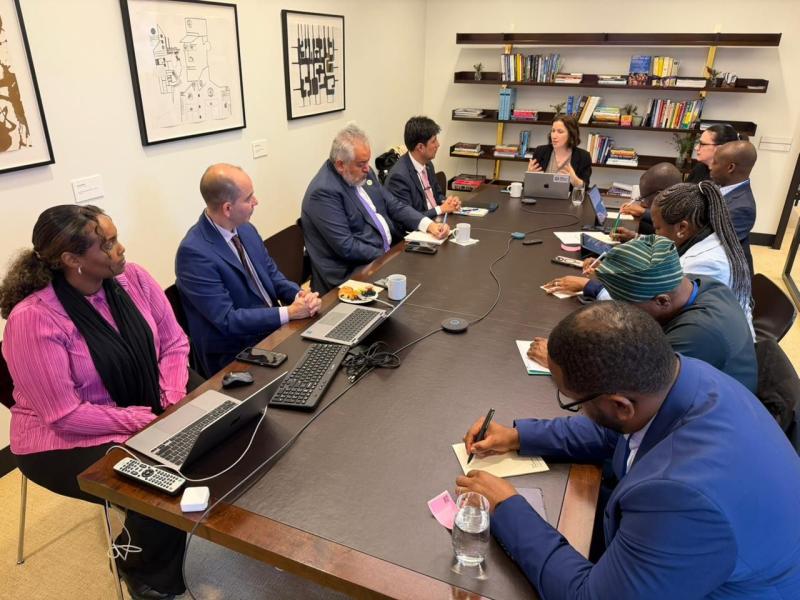
Heads of NSO from Ghana and Kenya, who participated in the first phase, shared concrete outcomes from their work: Ghana’s progress on closing data gaps around female genital mutilation through citizen-generated data and community collaboration; and Kenya’s work with civil society organisations and its revised Statistics Act, which now formally provides for citizen-generated data as a source for official statistics. Kenya’s DG also highlighted a landmark outcome: data generated through the initiative contributed to the granting of citizenship to previously stateless communities, demonstrating the direct policy impact of inclusive data work.
Nigeria and Senegal joined the initiative for Phase 2. Nigeria’s NBS shared plans to build on its recent national time-use survey — which found that women spend on average five more hours per day than men on unpaid care work — by conducting follow-up interviews with identified caregivers and embedding the work within SDG monitoring frameworks. Senegal signalled interest in integrating alternative data sources into the national statistical system and advancing the territorialisation of SDG monitoring at local levels.
Colombia’s DANE reflected on Phase 1 as a proof of concept for South–South collaboration, noting that the initiative changed how DANE approaches engagement with communities and civil society. The meeting’s discussion touched on shared priorities for Phase 2, including deepening CSO partnerships, improving data quality frameworks, translating data into local-level policy action, and expanding the work to include disability data.
The five countries will come together again at the Global Data Festival in Nairobi in June 2026 for a dedicated session as part of Phase 2.
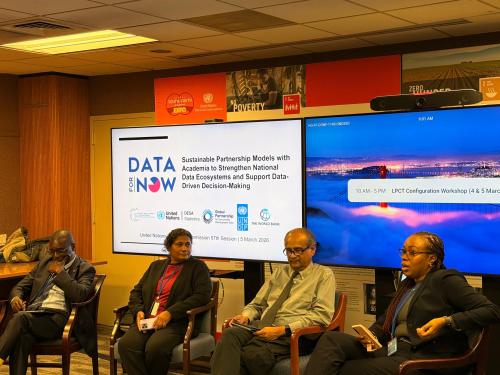
Data for Now: Sustainable partnership models with academia
A dedicated side event on 5 March by the Data4Now initiative explored how stronger partnerships between National Statistical Offices and universities can advance data science capacity and support data-driven decision-making. Drawing on a recent study, the session focused on practical models for sustainable collaboration amid constrained resources.
Leveraging administrative data for sustainable development and better decisions
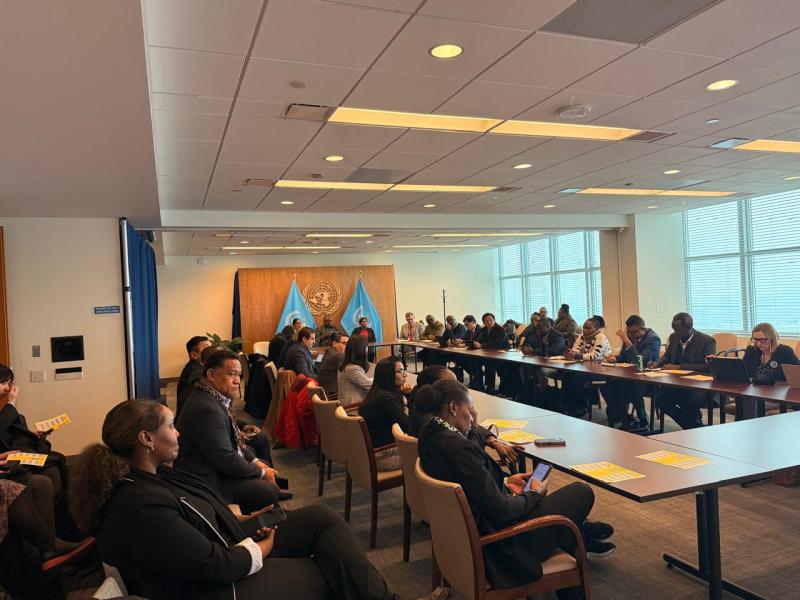
The Collaborative on Administrative Data hosted an event on Thursday afternoon, convening NSOs and key development partners to exchange practical lessons learned on harnessing administrative data for SDG monitoring and beyond. The discussion focused on concrete country experiences using administrative data across key policy domains, including environment and climate, crime, justice, and governance.
Power of Data: aligning action to drive digital transformation
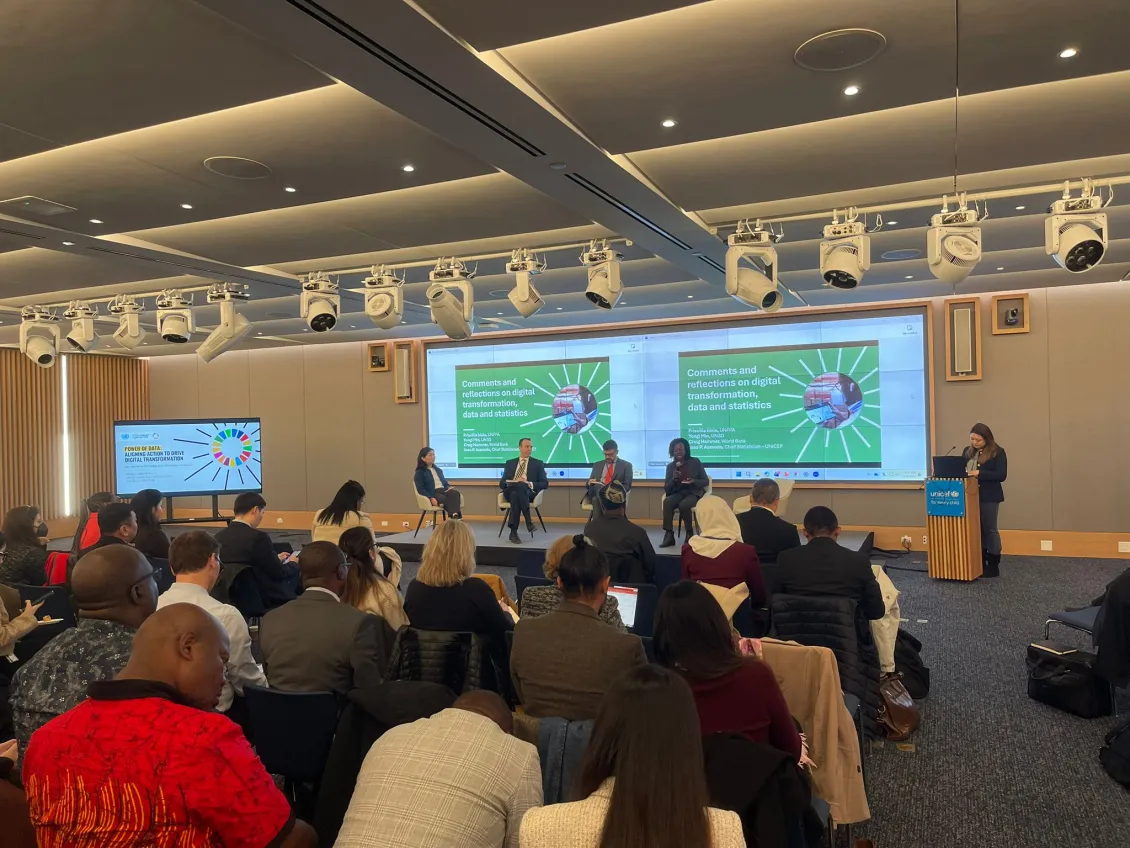
Under the Power of Data High Impact Initiative, national statistical leaders and UN partners convened on 6 March to examine how coordinated investments, digitisation, and AI can accelerate progress toward the Sustainable Development Goals. Champion countries, including Costa Rica, Mongolia, Nigeria, and Kenya, shared lessons on aligning digital transformation with national statistical leadership.
Together, these engagements reflect the Global Partnership’s commitment to advancing inclusive, interoperable, and resilient data systems through partnership, political leadership, and coordinated investment.
Initiatives

Power of Data: Unlocking the Data Dividend for the SDGs

Collaborative on Citizen Data

Collaborative on Administrative Data

Make Inclusive Data the Norm
