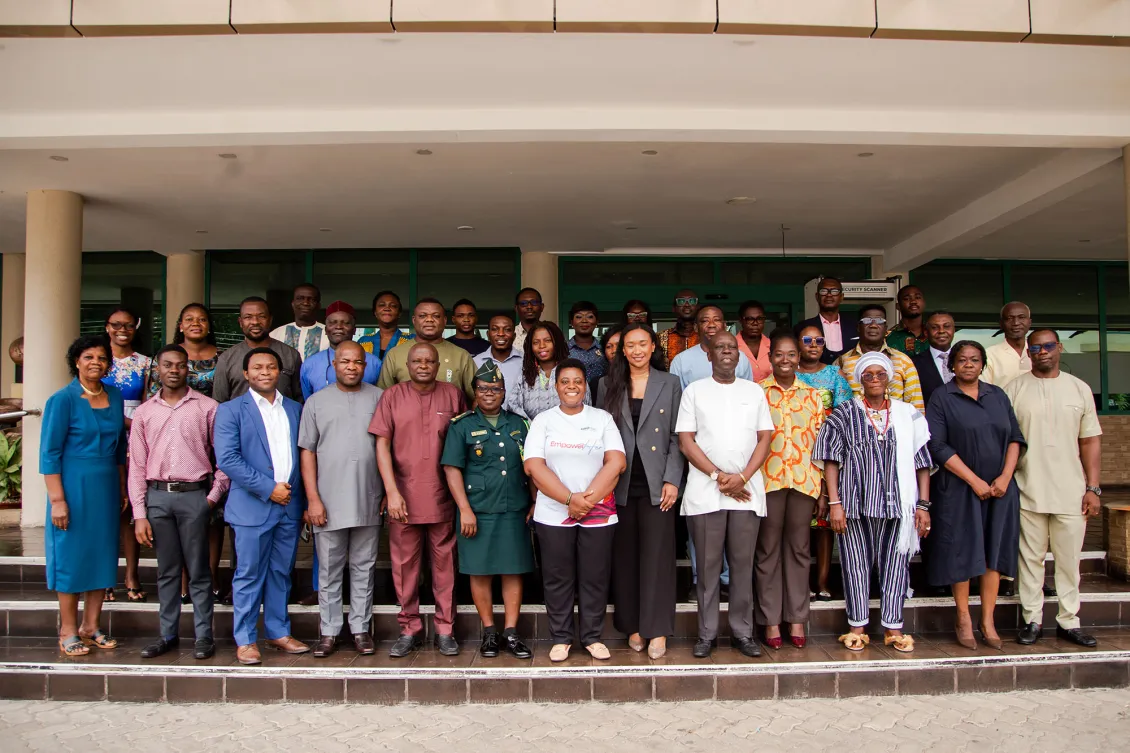
 Participants at Ghana's national validation workshop for evaluating the data gaps and advancing inclusive data practices to tackle FGM, in April 2025.
Female genital mutilation (FGM) is still a significant challenge in parts of Ghana, driven by deep-rooted social, cultural, and religious beliefs. While Ghana has made strides toward the eradication of this harmful practice, FGM persists particularly in remote regions. Meanwhile, the lack of comprehensive, timely, and inclusive data on the scale of FGM makes designing targeted policies and interventions difficult.
Ghana chose using better data to tackle FGM in three northern regions of the country as its main use case for MIDN. Traditional data sources have struggled to capture accurate and timely information on this issue. This is down to a number of reasons, including the sensitive nature of the subject, and logistical issues in collecting data from rural areas. The lack of comprehensive data has led to under-reporting, and information that does not tell the full story on the scale of FGM.
The approach
Inclusive, timely data can play a key role in shining a light on FGM, therefore helping to inform better policies and more effective interventions.
Through MIDN, a consultation with multiple stakeholders highlighted important gaps in the data, such as outdated data from 2017/18, and policies that needed more current information. Where data did exist, it often lacked disaggregation by factors such as age and socioeconomic status, making the creation of targeted policies more challenging. The MIDN assessment also highlighted the potential for digital tools that put people first and could capture accurate information directly from citizens safely and anonymously.
Ghana Statistical Service (GSS) is legally required to explore non-traditional data sources for national development. This positioned the country to pioneer technology-driven citizen data solutions as part of the MIDN initiative. This mandate enabled Ghana to apply existing digital infrastructure and mobile penetration for citizen data collection on FGM to bridge key data gaps, while building institutional frameworks to ensure their sustainability.
In April 2025, GSS and the Ministry of Gender, Children, and Social Protection (MoGCSP), together with the Global Partnership and APC-Colombia, held a national validation workshop as part of MIDN. The event brought together more than 50 representatives from government agencies, civil society, academia, media, and development partners to review the findings of the initial consultations and national landscape assessment on inclusive data, with a focus on FGM. The goal was to validate the data gaps identified above, and agree concrete next steps for the best way to build more inclusive data on FGM, including the development of new digital tools for citizen reporting (see below), as well as training and capacity building to support this shift.
There is no current national data by the NSO or Ministry of Gender to compute SDG indicator 5.3.2. We’re also contending with gaps in institutional coordination, limited technical capacity for digital solutions, and insufficient awareness campaigns to address cultural drivers of FGM.”
— Victor Ohuruogu, Regional Lead for Africa, Global Partnership for Sustainable Development Data, speaking at the national validation workshop in April 2025.
At the final learning exchange in August 2025, Ghana's Vice President gave a keynote speech to more than 180 people, including government leaders from Ghana, Kenya, and Colombia, UN representatives, development partners, civil society, academia, and private sector participants. The Vice President affirmed that Ghana's new Government is based on data-driven, evidence-based governance approaches, where policies are informed by facts, shaped by people's lived experiences, and designed for inclusive national impact.
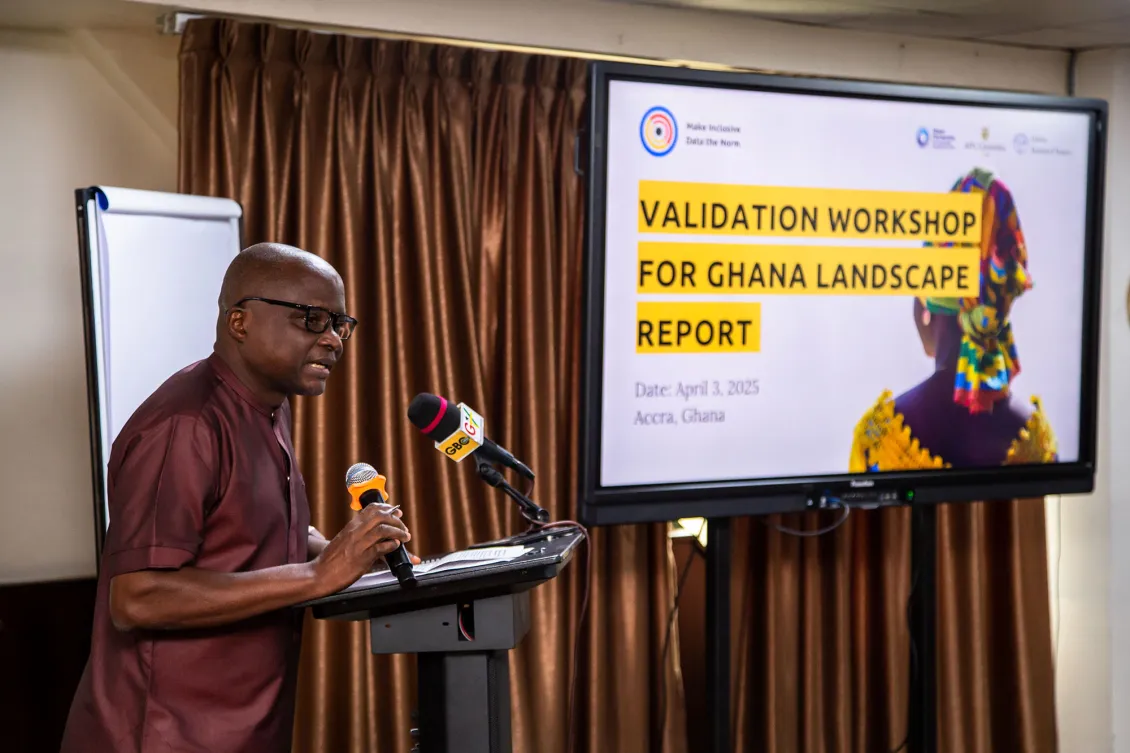 Mr. Godwin Odei-Gyebi, Director and Head of Demographic Statistics at GSS, speaking at the national validation workshop in Ghana in April 2025.
Outcomes and results
Mobile app development for citizen data
The validation workshop advanced the development of a mobile app prototype by Mobile Web Ghana to enable safe, anonymous, and community-centered data collection. GSS, in collaboration with other stakeholders in the National Statistical System, have a rich history in development of mobile applications addressing distinct policy priorities while advancing accessibility standards for improved citizen participation.
The Boame SGBV App, developed in partnership with UNFPA and launched in 2021, enables Sexual and Gender-Based Violence data collection, and shares information and support services for survivors. CleanApp Ghana, developed with the Ministry of Sanitation and Water Resources, GIZ, and local assemblies, was launched in 2023 to address waste management through citizen reporting systems. Most recently, the District Assemblies Common Fund (DACF) Support App, launched in 2023, focused on enabling people with disabilities to evaluate District Assembly Common Fund allocations.
Public Services Satisfaction Survey and technical innovation
Ghana’s Public Services Satisfaction Survey (PSSS) assessed SDG Indicator 16.6.2 (Proportion of the population satisfied with their last experience of public services), showcasing an extensive co-creation methodology from design thinking to policy impact. In the August 2025 deep dive session, Ghana showcased its sophisticated data science integration inside GSS, the creation of user-friendly mobile applications featuring multilingual and accessibility options, compatibility with basic mobile phones, and strategic alliances with telecommunications companies for zero-rated services. The pilot implementation in two towns produced concrete policy recommendations for enhancing service delivery.
Citizen Data Framework
Ghana also developed its own Citizen Data Framework, which sets rules and standards for how to include citizen data in the National Statistical System. During the field visit in August 2025, GSS showed how the framework was put into action and how it helped organize several citizen data projects. The CSO Platform on SDGs showed how civil society organizations use the framework, which is a useful way to help with national SDG monitoring.
Multi-stakeholder engagement
At the final learning exchange workshop in Ghana in August 2025, participants also examined how involving stakeholders in the data ecosystem during the design phase fostered ownership and commitment among all parties involved.
Ghana's citizen data projects involved collecting stakeholder input and setting up technical teams at the national, regional, and district levels. This multi-tiered structure made it possible for local governments to adapt national rules while still keeping all levels of government in sync. For example, the national technical team oversaw the DACF project strategically, while district teams carried out the work in pilot locations, making sure that both standardization and responsiveness to the local context were met.
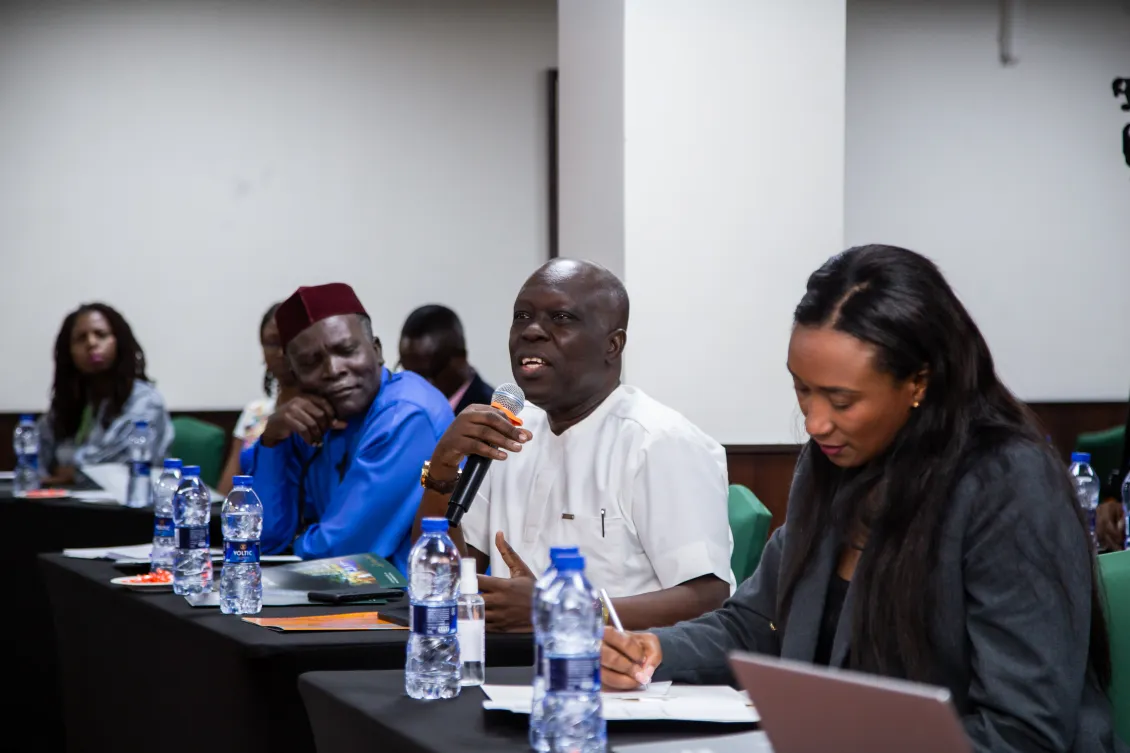 UNFPA Country Representative Dr. Wilfred Ocham called for systemic change in how data is collected and used at the national validation workshop in April 2025.
Training and capacity building
Recognizing that different stakeholders have different capacities and technical needs, Ghana developed a three-module training program that targeted: 1) policymakers on law and data use, 2) data producers and users on analytics and communication, and 3) IT teams on mobile app development and governance. This differentiated approach went beyond strengthening institutional capacity, to ensuring sustainability through cross-sector coordination. The training, facilitated by Abronoma Trade and Consulting, included a focus on human-centered design aimed at enhancing participation and engagement to increase the effectiveness and inclusiveness of data initiatives.
Challenges and solutions
Technical barriers reflected dependencies on telecommunications infrastructure, such as slow app downloads in places with weak connections, as well as non-functioning short codes. It also took extensive sensitization to build community trust and collaboration, including conducting validation exercises with affected communities. Ghana committed to conducting user testing on new technologies to avoid problems and keep records of the processes to support institutional learning.
Ghana's vision focused on making institutional systems stronger so that citizen data could be applied beyond one project. This meant building strong partnerships with NGOs, civil society groups, and religious organizations, improving GSS's ability to develop apps that will last, and making sure that the user interfaces of relevant platforms are easy to use.
Keeping projects going after the pilot phase remains a top priority for Ghana. The country aims to focus on institutionalizing processes, building internal capacity, and getting telecommunications and development partners to commit for multiple years. The switch from project-based funding to core government budget allocations for citizen data infrastructure represented a common challenge shared across all MIDN countries.
Read more about how Ghana is tackling FGM and the role of inclusive data and policy.