
The whole is greater than the sum of its parts. Since 2015, the Global Partnership network has grown to over 700 data and technology partners from around the world and across various sectors. Each partner in this network, unique in mission, community, and region, shares a commitment to creating a world where data delivers social good.
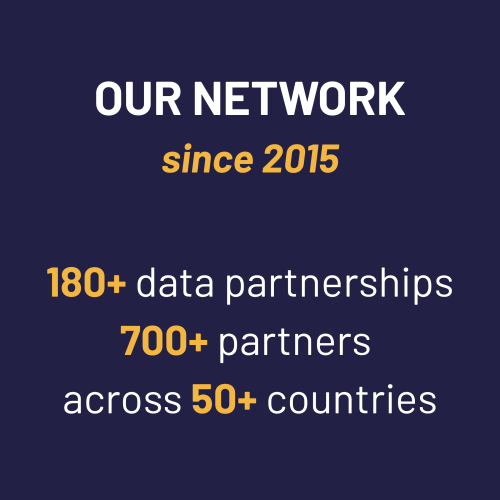
Reflecting on the incredible growth and impact of our network over the past 10 years has us excited for the decade to come. The path ahead is not without its challenges, as we navigate what comes after 2030, resource constraints, and the need to make AI fit for development. But, before we launch into the next step, we want to take a moment to look back on some of the achievements of this powerful network and the partners that have made it so.
Back to the beginning
From the outset, the Global Partnership has prioritized inclusion within the network, promoting broad participation in the emerging data revolution. In practice, this meant a call-out to organizations that shared this commitment to join, whether UN bodies, established data groups, or newly founded grassroots organizations. Key civil society partners, such as CIVICUS, GeoCensus, and the Open Data Institute, to name a few, were instrumental during this initial network phase.
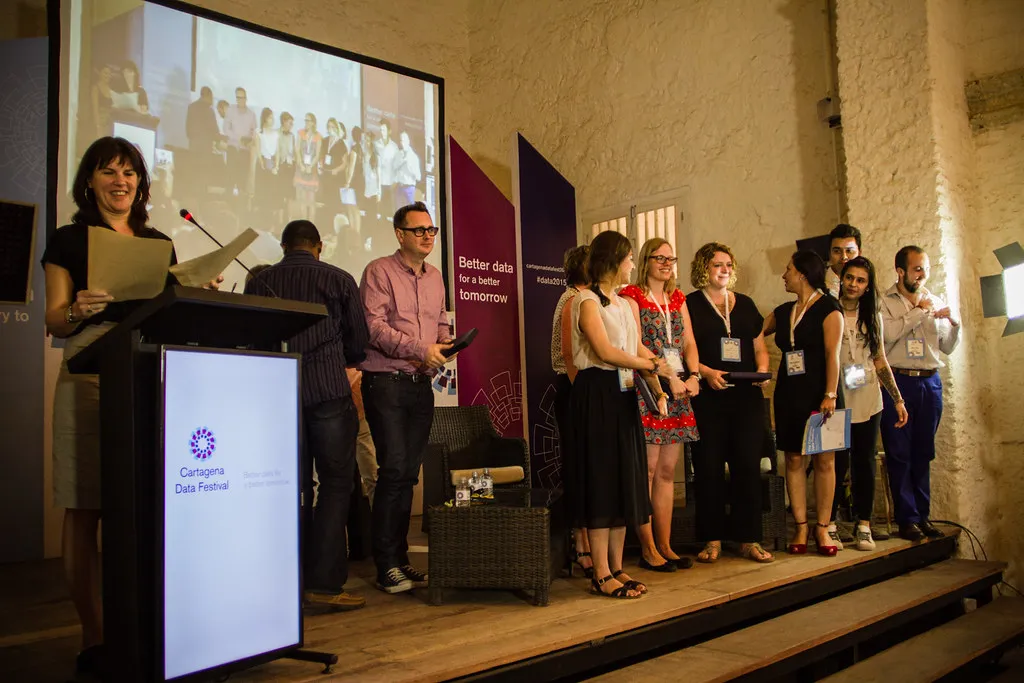
Much of this was catalyzed at the Cartagena Data Festival in 2015, where Colombia’s Statistical Office (DANE) played a key role in initiating the Global Partnership. This conference set the stage for continued collaboration around data and statistics, with the multiple Global Data Festivals hosted by the Global Partnership and World Data Forums hosted by UN DESA that followed, building on that momentum.
Within three years, the Global Partnership grew to over 150 network partners. During these early years, one of the first signs of how the network was able to meaningfully connect partners was when the main network communication tool, the listserv, became a hub for collective resourcing during the 2017 Earthquake in Mexico, where the network played a critical role in supporting the Mexican government in timely data collection.
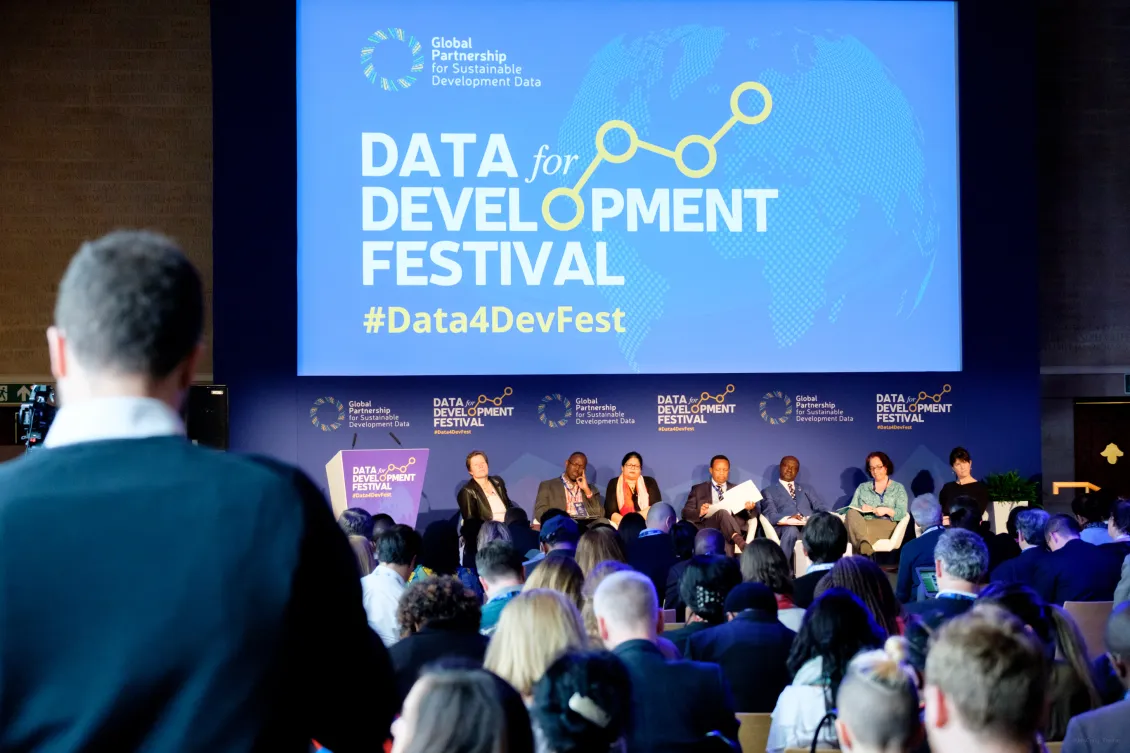
Our big moment in this initial network phase came with the first official Global Data Festival (then known as Data for Development Festival) hosted in the UK. Over 400 individuals from around the world convened in Bristol to discuss key data topics, including inclusive data, earth and geospatial observation data, and youth data advocacy. As the first network convening, it was transformative and set the stage for the network's continued growth.
A global shock puts a spotlight on data
As the COVID-19 pandemic took hold in 2020, international development efforts faced new challenges. The Global Partnership adapted to these changing global needs, seeing the critical role that data would play in understanding and responding to the global crisis. We tapped into the power of the network to share and amplify datasets and resources, and worked with partners like UN ESCAP, the Ghana Statistical Service, and the UK Office for National Statistics to deliver data systems and expert training to help deliver the data countries needed.
The Global Partnership also connected with civil society partners around the key work they were doing on the ground. Across the world, we spoke with grassroots organizers, youth advocates, and civil society groups about the unequal effects of the pandemic and published these thoughts in our Unequal Pandemic publication.
COVID-19 shone a light on the importance and potential of collaborating and working in cross-sector and multi-stakeholder partnerships. All around the world, our data partnerships have been driving innovation, finding new ways of working, and producing more and better data to support evidence-based public health and policy responses. Better data, better decisions.
A budding network blossoms
Inspired by the impactful collaborations during COVID, we were eager to scale our partnership approach and grow the network. But to keep it as a network of passionate and committed partners, not a rigid membership-only club. In fact, we threw the idea of membership out the window. All organizations face time, staffing, and financial constraints, and we knew this. So we eliminated the barrier to participation and focused on the inclusion of all organizations working towards this shared mission.
The result: 300 partners quickly became 600. As we removed barriers, civil society partners had a greater capacity to collaborate with us. Government and Multilateral partners had a greater agency to work with us and one another. For example, partnerships with and among statistical offices from Ghana, Sierra Leone, Botswana, Colombia, and Uruguay strengthened and laid the groundwork for future projects.
So much of this culminated at the 2023 Festival de Datos in Uruguay. Over 500 partners came together for 3+ days of roundtables, interactive discussions, and real-world data applications. A lot has changed since we hosted the last Festival in 2019, from a global pandemic to the rise of AI and emerging technologies. This conference innovated and brought together stakeholders at the forefront of these issues. Additionally, this event led to close working relationships with the Uruguayan host government, particularly the statistical office, INE Uruguay.
In the data community, it can be easy to segregate by sector, subtopic, or region. But we are remiss in not having key moments when we are brought together. At the Festival de Datos, partners networked with funders on the financing for the data agenda, received training on AI usage, and heard directly from youth data advocates. Afterwards, partners left with new learnings, a bigger network, and a desire to do it all again.
Partnering for a prosperous future
Following the 2023 Festival de Datos, the network of partners expanded to over 700 organizations. But the timing made sense; data is needed now more than ever. As we see the rise in AI and emerging technologies gaining prevalence, we need stronger data systems to make these systems work for development. And this network was well placed to make that happen.
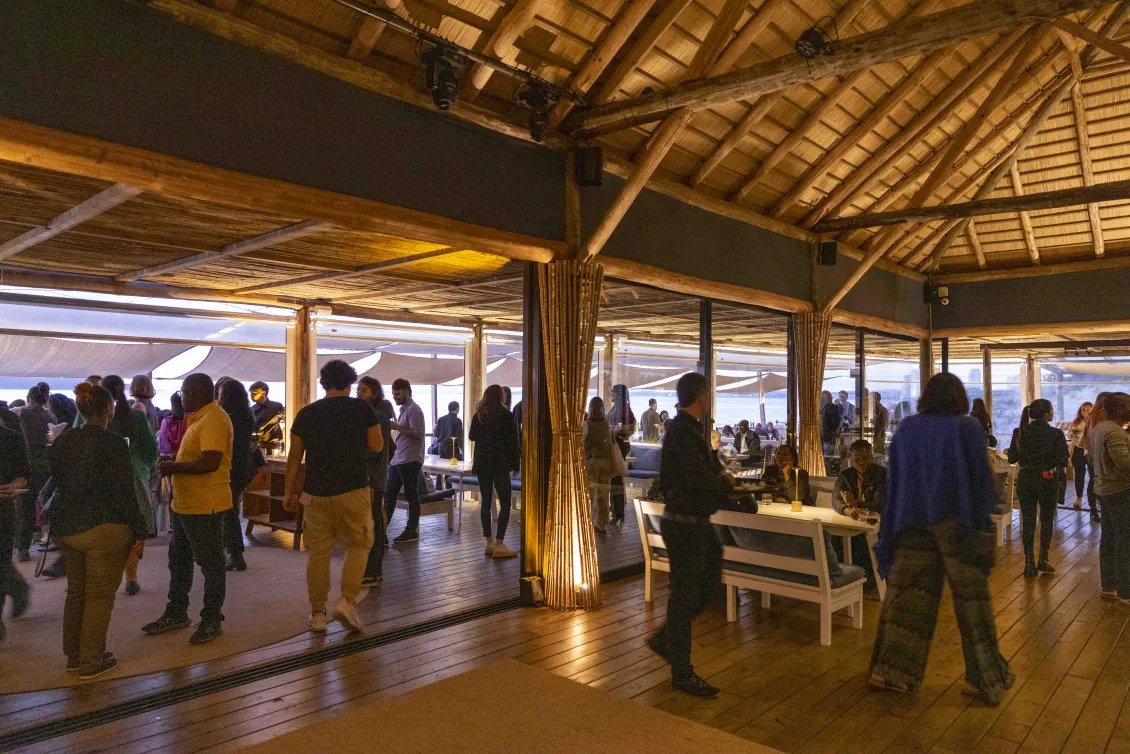
From the need for citizen data representation to responding to AI and incorporating new voices, we consistently leverage the network expertise and sense of collaboration to build coalitions that can deliver data solutions to meet these needs. Moreover, we listen to our partners as they provide feedback on the evolving priorities of the global and local data communities. This is what we at the Global Partnership are here to do. Read more about our work so far in emerging technology and AI, climate and health, and agriculture and food security.
This work has become both more challenging and necessary in recent times. For example, in February, we witnessed the mass removal of vast and important datasets from online platforms, hindering data-informed decision-making and critical research. We responded to this by hosting a Disappearing Data Town Hall, bringing together organizations such as the WHO and DataKind, among others, to discuss pressing issues. We may not have a clear path to a solution, but in the absence of one, we connect like-minded partners to share ideas and innovations, creating opportunities for them to collaborate and find their way down the path together.
What makes it work
The Global Partnership’s network is an informal model. We avoid hierarchy, fees, requirements, and anything that could prevent an organization from partnering with us. We don’t get bogged down by paperwork and formalities (because who wants that anyway?). We focus on the partnerships and the data.
Each partnership is built differently. We try to be flexible and adapt to the needs of the network. We regularly connect with some partners, and their input drives much of our collective work forward. Others are less actively engaged, but may look to our impact stories to learn about the trends in the data community. Truthfully, it is all different. If you ask the Global Partnership Secretariat members who manage these plentiful relationships with partners about the ‘secret sauce,’ you’ll probably get a variety of responses. That’s intentional.
The Global Data Festival is the most significant representation of this. A large number of organizations sharing varying commitments to data brought together under one (huge) conference center roof. It is not invitation-only; we do not hoard the information shared, it is open to everybody, whether officially part of the network or not. We hope you’ll see what all the hype is about by joining us in Kenya in June 2026.
What’s next?
The incredible challenges and changes of the past year demand dramatic solutions. We are committed to adapting how we build partnerships and uplift the network to meet these rising challenges.
We are committed to hearing more from partners and want more organizations to amplify their work on our partners' listserv. We are excited to soon launch a Town Hall series to bring partners together on key issues facing the data community. We envision a Global Data Festival where partners, new and longstanding, have the space to benefit from our solutions brokering, coalition building, and learning convening.
Every day, we are reimagining our partnerships and our network to deliver the power of data to the development community. We hope you’ll work with us to make this goal a reality. Have an idea? Want to work with us? Email us at [email protected].