
National averages can hide who is being left behind. Faith Masibo Sikuku, a Fellow with the Disability Data Initiative (DDI), uses disability-disaggregated data to bring those gaps into view and to inform more inclusive policy. At the Global Data Festival and Kenya Space Expo & Conference 2026 in Nairobi, she gave a lightning talk, “Inclusion and Accountability Through Disability-Disaggregated Data: My Story Behind the Numbers,” that set DDI’s evidence alongside her own life.
Her story was the part of the talk about “what can happen when someone is seen, measured, and supported to transform their life.” The evidence came from DDI’s databases. Faith wanted governments, policymakers, NGOs, and organizations of persons with disabilities (OPDs) to use that evidence when they design programs and make everyday decisions, so the rights of persons with disabilities can be properly monitored. She also asked programs to collect more disability data and to share it with researchers, practitioners, and decision-makers. Accountability depends on it, she says. Without that data, persons with disabilities remain caught in what she calls “the persistent problem of invisibility and exclusion in development programs.”
Since the Festival, Faith and her colleagues have run more co-creation workshops with OPDs and national stakeholders. She says the workshops have built trust and improved disability data literacy among the people taking part. In some targeted interventions, disability-disaggregated evidence now shapes how programs are designed and monitored, and she reports better accessibility outcomes where that has happened.
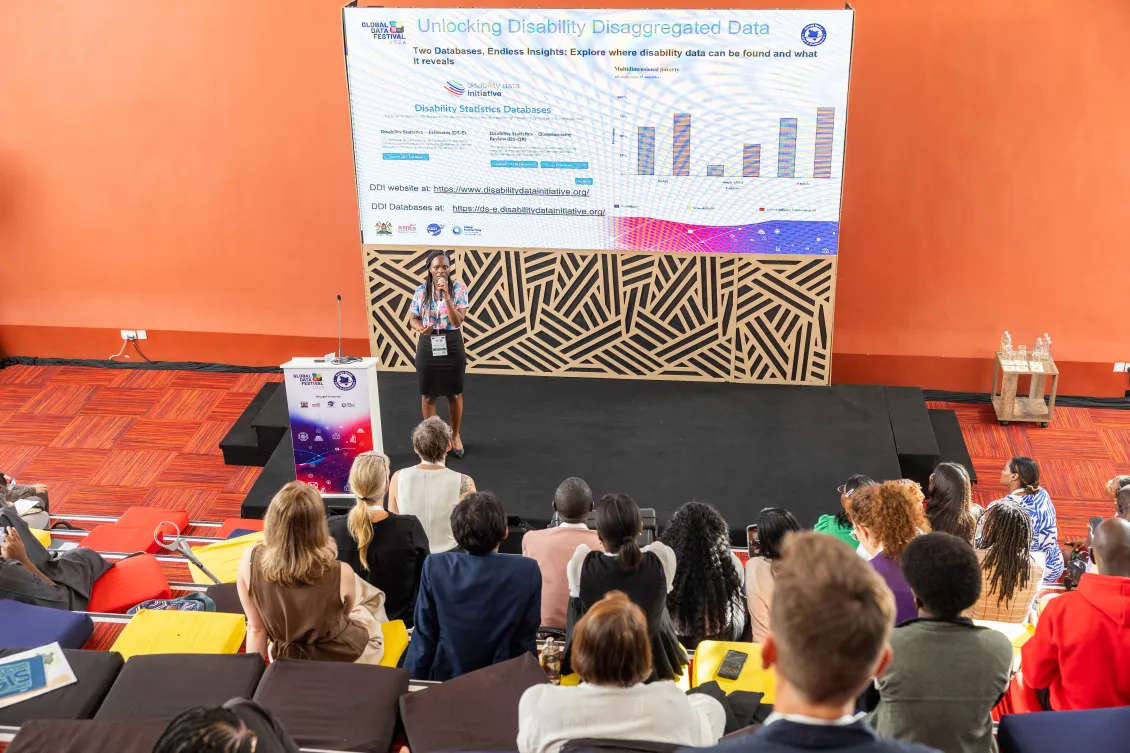
Her session also led to conversations with government representatives, NGOs, and OPDs. Some of those are turning into collaboration on frameworks for disability-inclusive monitoring and accountability. She wants the evidence to shape national policy and the way individual organizations work day to day.
What she heard from people in Nairobi has stayed with her. Participants wanted persons with disabilities directly involved in the process, and they wanted stakeholders to know the DDI platform is there to use. They also told her national figures are not enough. Disability-disaggregated data, they said, has to reach “more local levels, where decisions are made and lived realities are felt.” Faith has since put more of her effort into inclusive engagement and into raising awareness of the DDI databases, so the evidence informs daily decisions and not just national reporting.
