Introduction
Community voices are crucial in development because they reveal how policies and programs translate into lived experience. They offer data that is grounded in everyday realities, information that official statistics often miss. Listening to such insights ensures that interventions are designed with people, not for them.
At Video Volunteers, our interest in working with artificial intelligence emerged from a practical question: how can technology help communities articulate their experiences, be heard at scale, and have their knowledge recognized as legitimate data? For us, AI is not a replacement for community voice, but a tool that can support people in expressing, organizing, and amplifying that voice on their own terms.
AI can help communities frame their voices, express them, and recognize them. As an organization, we became interested in working with AI because we saw that it helps poor and marginalized communities access the information they need and feel heard.
In global conversations on citizen data, including recent expert group meetings and workshops, community narratives are increasingly recognized as a critical form of citizen data. These stories are not just anecdotes. When systematically collected and analyzed, they offer structured insights into how systems work or fail for people.
In our workshops, we have asked participants to use AI to draft letters for local officials or to ask questions like, “What should I do if my child’s teacher is bad?” The answers they get are often practical and compassionate in ways that traditional searches or institutions rarely provide.
For many rural users, conventional online searches return long lists of results that are difficult to navigate or interpret. By contrast, AI allows people to ask questions in their own words and receive context-specific guidance. This capacity to listen and respond is what makes AI meaningful in low-resource settings and helps communities recognize their own agency.
When they search online, they face endless lists of results they cannot process. But when they use AI to ask, “How can I help my daughter get a better education?” or “How do I file a First Information Report?”, they receive relevant and clear answers. For us, this is what makes AI powerful: it listens, responds, and helps communities recognize their own agency.
The power of community voices
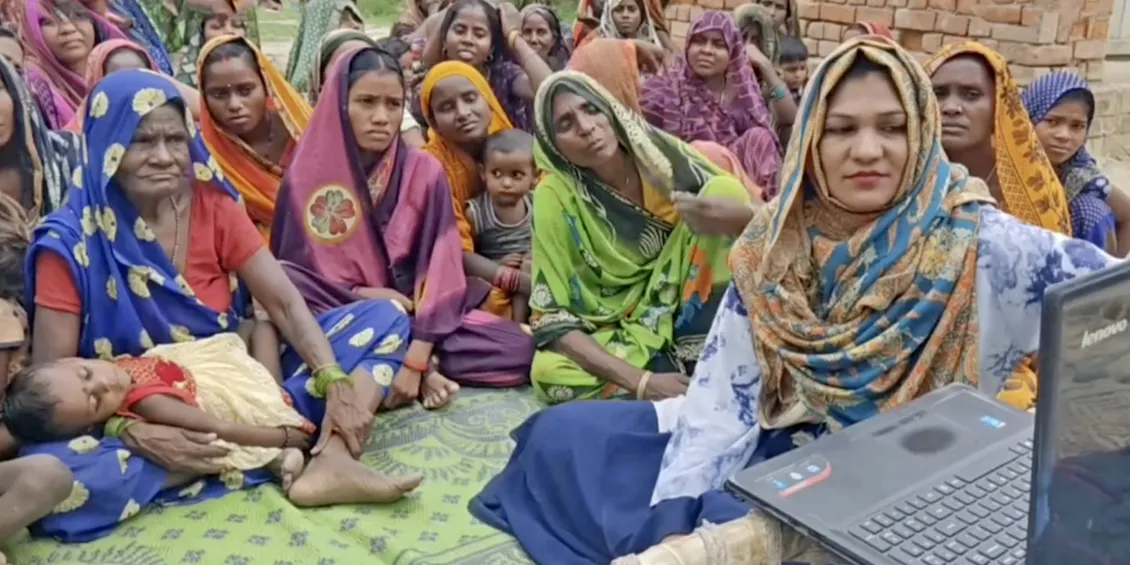
At Video Volunteers, we have built an archive of about 30,000 videos documenting India’s transformation through the eyes of communities themselves. These stories show both the barriers that make certain problems persist and the ways people organize and demonstrate resilience.
This body of work aligns naturally with the broader citizen data ecosystem. Citizen-generated videos, testimonies, mobilization stories, and other narrative traces are forms of citizen evidence. The Methodology for Voice is our structured approach to analyzing evidence, so that patterns, priorities, and lived-experience insights can be interpreted responsibly and used in decision-making.
Our network includes 200 paid community content creators and around 2,000 volunteers across India’s poorest districts. About one in four of our videos has helped solve the problem they reported, reaching more than 47 million people.
Research conducted with the University of Virginia, involving more than 1,200 government officials, found that when officials viewed citizen-produced stories, empathy and upward accountability measurably increased. To date, more than 4,500 of our videos have prompted real action by local authorities.
Video is effective because it motivates, connects emotionally, and drives accountability. Yet despite the widespread availability of mobile phones, video remains underused as a medium for community-led development.
AI in analyzing community videos
Our biggest challenge was scale. We have 18,000 edited and organized videos in many languages, and no human could watch them all. To address this, we developed the Research Bot, a tool built pro bono by technologist Shiva Kommareddi of Impact Makers. In collaboration with the Aapti Institute, we are studying how AI can be used to listen meaningfully to development-related content created by marginalized communities—at scale and on their own terms.
AI has helped us identify recurring themes like empathy, agency, and resilience that often go unnoticed in traditional analysis. Using our annotation schema for concepts such as agency and adaptation, the system was able to surface quotes that clearly reflected these values, even when communities did not use formal development language.
One powerful finding is how AI translates colloquial community language into terms recognized by the development sector. People rarely use words like “intersectionality” or “root causes,” yet those ideas are embedded in their narratives. AI helps decode these meanings and makes them visible in policy conversations without stripping away context.
A striking example came from 472 videos, of which only 85 were tagged as “health.” When we analyzed the rest—videos about education, gender, livelihoods, and caste—we found health-related issues everywhere: vaccine misinformation during school closures, daily wage earners avoiding treatment to prevent lost income, and caste-based barriers to water access. AI showed that health was not a siloed issue but connected to structural injustices.
This approach is further detailed in our paper, “How We Used AI to Hear Health Beyond Hospitals,” which sets out the methodology for using narrative data to surface patterns that siloed datasets often obscure.
Our team also did manual tagging and found that 43 percent of videos identified root causes, 62 percent showed community agency, and 30 percent revealed unexpected insights. These patterns were not taught or required, which suggests they reflect how communities naturally talk about development.
Using AI for community data raises serious ethical considerations. Consent, privacy, and transparency are essential, and people must understand how their content will be used. To address this, we combine AI-enabled analysis with human oversight and active community participation, ensuring that technology supports listening rather than replacing it.
Conclusion
The Citizen Data Collaborative, a global, multi-stakeholder initiative working to strengthen the production and use of citizen data, strengthens this approach by creating a shared space for national statistical offices, civil society, and community-driven organizations to develop principles and practices that honor community voice.
Video Volunteers’ Methodology for Voice contributes one pathway within this broader effort. It is a structured, methodical approach to organizing and analyzing narrative evidence, designed to surface insights from lived experience without stripping away context or meaning. This approach is explored in detail in our study with the Aapti Institute, Finding Voice: Lessons from Listening for Community Insights, which examines how AI can support meaningful listening to community-created media at scale.
While the methodology emerged from our work with community videos, it is not specific to one geography or medium. It may be useful to any organization seeking to learn from narrative materials such as qualitative interview transcripts, raw footage gathered during documentary production, or community-created videos shared on YouTube and social media.
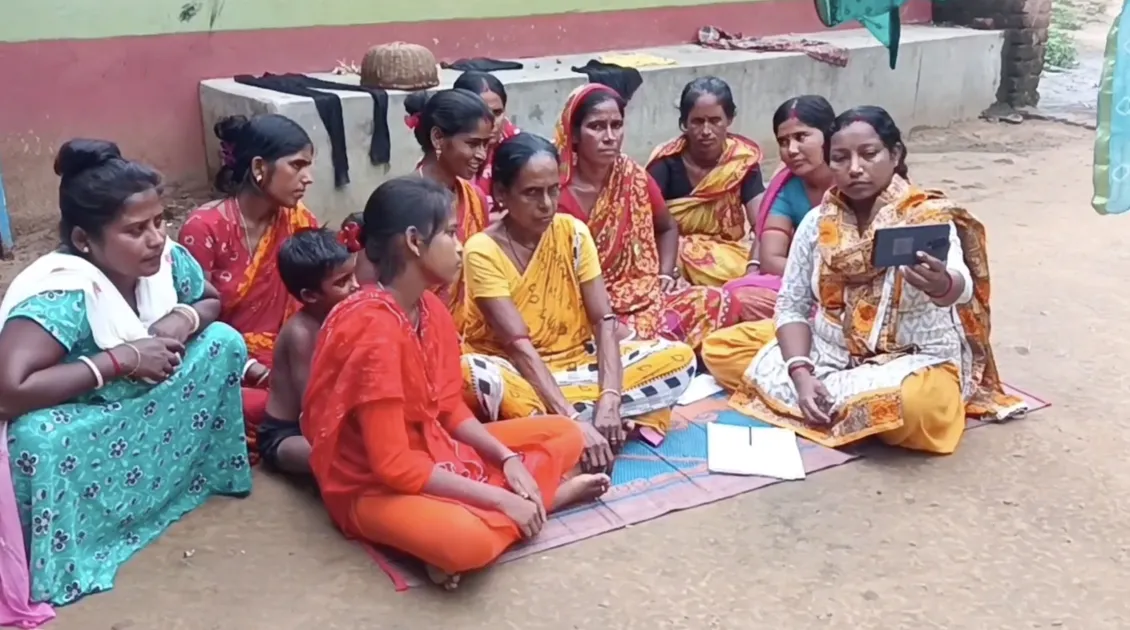
In this way, archives of community-created media can become more than repositories of stories. They can form part of a wider ecosystem that recognizes citizen-generated evidence as essential to inclusive and responsive data systems.
Scaling community insights is ultimately less about technology and more about investing in people, partnerships, and institutional practices that treat communities not merely as data sources, but as equal partners in shaping how their knowledge is interpreted and used.
Technology can listen at scale, but only partnerships and sustained community investment can ensure that voices are heard with respect and acted upon. The next step is clear: treat communities not merely as data sources, but as equal partners in designing the systems that learn from them.
About Video Volunteers
Video Volunteers is a global organization that has spent the past two decades building one of the world’s largest grassroots media and civic storytelling networks, rooted in rural and marginalized communities in India. Our core work is straightforward but powerful: we train and support local people to document problems they experience firsthand, share those stories publicly, and use them to demand accountability and drive solutions.
In India, Video Volunteers works with more than 200 paid Community Content Creators and thousands of volunteers across multiple states. Together, they have produced over 25,000 citizen-made videos on issues including water access, health care, education, gender-based violence, labor rights, and corruption. Nearly 5,000 of these stories have helped resolve local problems—enabling communities to secure basic services, access entitlements, and hold authorities accountable—benefiting more than 47 million people.
Our model combines grassroots storytelling with systematic engagement: creators document issues, mobilize communities, and bring evidence directly to local officials and institutions. Research with the University of Virginia, involving more than 1,200 government officials, shows that exposure to these citizen-produced stories significantly increases empathy and upward accountability among decision-makers.
Alongside this on-the-ground work, Video Volunteers is widely recognized as a leader in participatory media and civic innovation. We have received awards from Ashoka, the Google News Innovation Fund, the Knight News Challenge, Echoing Green, TED, and the World Summit on the Information Society. Our work has been covered by outlets including the BBC, The New York Times, France 24, Deutsche Welle, NDTV, and CNN-IBN, and reaches millions through social media and community networks across India.