Traditional instruments used in official statistics rely on standardized methods that fail to capture the complexity, diversity, and lived experiences of all communities. This causes certain groups, contexts, and territorial realities to be overlooked. In recent years, Colombia has been working to build a data ecosystem that is more inclusive, participatory, and grounded in people’s lived realities by incorporating intersectionality in development data (IDD) as a national priority. This involves adopting new data sources and approaches to fill critical data gaps, enhance the granularity of insights, and amplify the voices and experiences of historically underrepresented communities. The process is led by the National Administrative Department of Statistics (DANE), in partnership with civil society organizations, academia, and international cooperation partners such as the Global Partnership for Sustainable Development Data (GPSDD), through the Make Inclusive Data the Norm (MIDN) initiative: a South-South collaboration between Colombia, Ghana, and Kenya, funded by the Agencia Presidencial de Cooperación Internacional de Colombia (APC-Colombia), that supports National Statistical Offices and civil society to co-create more inclusive and participatory data systems.
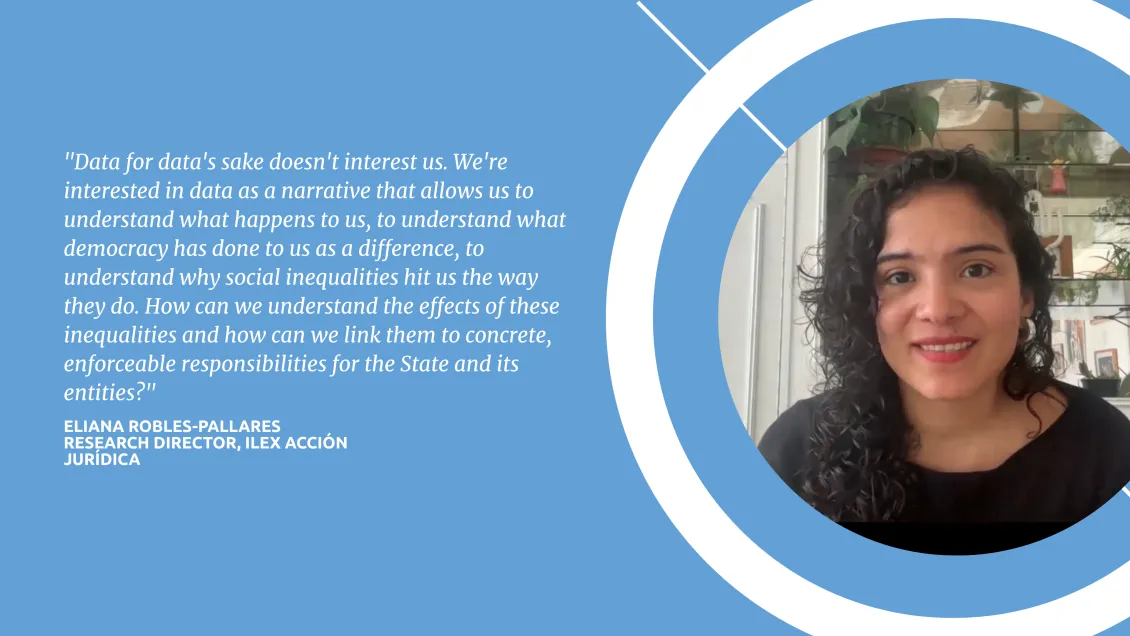
Two examples illustrate how this approach works in practice, and why it matters. In the case of human rights for LGBTIQ+ people, official statistics could capture data on homicides or violence in general. Still, they often failed to capture the motivation, specifically, whether violence was driven by prejudice. DANE realized that robust data was needed to make this specific type of discrimination visible. Civil society organizations working on the frontlines of this gap became central to reshaping how discrimination is measured.
Moreover, with initiatives like the Wayuu Multidimensional Registry and Partera Vital, DANE recognized that standard surveys could not adequately capture the complex social structures of the Wayuu people or the traditional health practices of midwives in the Pacific. The gap was a lack of cultural relevance and trust; traditional government surveys simply couldn't access or interpret these community needs as effectively as the communities themselves.
The legal mandate behind the shift
Colombia’s National Statistical System is evolving due to digitalization, stronger citizen participation, and a renewed legal framework from Law 2335 of 2023 on official statistics. This shift allows for the integration of non-traditional sources such as citizen data under standards set by DANE. The National Statistical Plan (PEN) 2023-2027, particularly Goal 35, commits to fostering citizen involvement in the production, validation, and utilization of statistical data through recommendations, best practices, and partnerships.
Between 2024 and 2025, DANE set to operationalize this commitment by organizing a series of workshops, collaboration networks, and initiatives such as “Data in Action”. These activities took place in various cities, including Bogotá, Medellín, Cali, Tumaco, and Cartagena, as well as through virtual platforms. This multifaceted approach aims to foster engagement and collaboration across different regions and communities.
The lessons emerging from these examples are not Colombia's alone. Through MIDN, they are being shared with peers in Ghana and Kenya, who are tackling parallel questions about how official statistics can better reflect the lives of marginalized communities.